At the end of January 2009, my unit mobilized for deployment to Iraq. We trained for two months at Fort Sill, Oklahoma, before flying to Kuwait then Iraq.
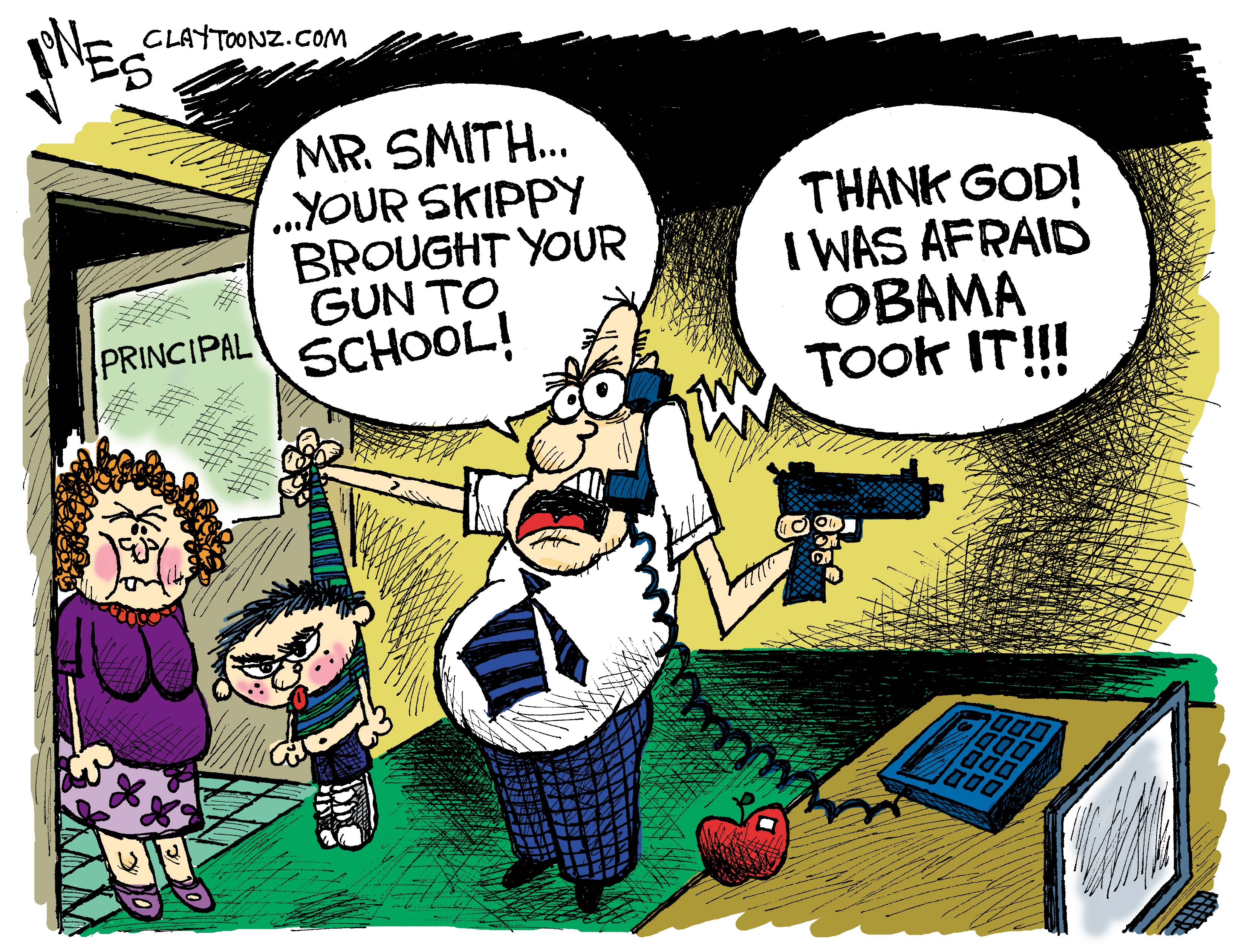
From the day we landed in Oklahoma, I heard "Obama is going to take our guns." I heard it in the barracks, I heard in the mess hall, I heard it in the motor pool and especially in the lines we stood in to draw equipment and gear.
The majority of the soldiers I deployed with either fully believed or had some inclination to believe that President Barack Obama was going to begin confiscating guns while we were deployed to Iraq.
At first I thought they had to be kidding, but it quickly became clear that between what they heard from the NRA, Fox News, and Conservative Radio, many of my fellow soldiers sincerely believed Obama was coming for their guns.
Now more than 2,700 days later, I just heard a Conservative saying that Obama will be "coming after our guns" before he leaves office. In the Army paranoia is normal, and that makes sense. Security requires that as few people as possible know sensitive information.
To put it another way: Ignorance saves lives.
But ignorance is the breeding ground of rumors and rumors are the fetid soil that grows paranoia. So it made some terrible sense that so many people would believe something as crazy as "Obama is coming for your guns." But they did. And now that Obama has been in office 2,700+ days, some of those soldiers still believe Obama is coming for their guns.
Veteran of four wars, four enlistments, four branches: Air Force, Army, Army Reserve, Army National Guard. I am both an AF (Air Force) veteran and as Veteran AF (As Fuck)
Sunday, July 10, 2016
Friday, July 8, 2016
Soldiers Hate the Media, Even When They Work in Public Affairs
But when I returned to the Army in 2007, I joined an Army that was loved by the public and covered by reporters who reported good news at a rate I found incredible as a Vietnam-era soldier.
And yet just as during the Vietnam era, every soldier I spoke to at any length about the media, hated the media. In fact, once I picked up a camera in Iraq and started writing a newsletter within our own brigade, half the soldiers in the unit regarded me as part of the media. Everything I wrote for that newsletter was reviewed by battalion or brigade headquarters. But I was the media.
In 2013 in one of the many ironies of my career, I actually went to the Defense Information School (DINFOS) at Fort Meade, Maryland. For three months I learned how to take pictures and write to military standards. Since I worked in public affairs as a civilian for nearly 30 years, a lot we were taught was not new to me. My biggest surprise at school was my classmates and teachers. Most of them liked the media no better than pilots, door gunners, grunts and mechanics. One major I worked with regularly was as suspicious of the media as anyone I ever met. Some of my DINFOS classmates were openly hostile to the media.
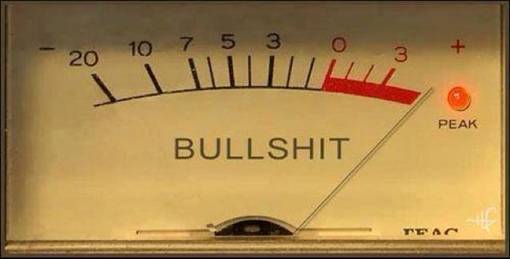
Many civilians in public affairs, particularly those in media relations, are like me. They wanted to be reporters, but decided the pay and future were so bad that they went into public affairs. Also, one important thing I lacked that is necessary for a good reporter is an internal Bullshit detector. My default setting is optimism. My Army stories in the 70s and in Iraq were all about soldiers doing their job. I could not investigate anyone. So serious journalism was never possible for me. After college, I found a job that kept me in contact with serious journalists.
In civilian life, there is no question who is a reporter and who is in public affairs. Nobody confuses the White House spokesperson with a White House reporter. But in the Army, most soldiers of every rank from private to general think their own public affairs people are reporters. Some of the military public affairs people I have known get into that career because the path they actually wanted was blocked. Some are simply assigned to do something they really don't want to do. Both in Germany in the late 70s and since returning to Army Public Affairs in Iraq, I have met very few soldiers who know the difference between Army Public Affairs and reporters, and very few soldiers in public affairs who actually like the media.
Wednesday, July 6, 2016
Every Thursday, I Shave My Legs--Even in Iraq
Since one of my first big bike crashes in 1994, I have shaved my legs every week, usually on Thursday before racing on the weekend. I started riding seriously in 1989, but resisted shaving my legs until the crash at the Tuesday Night Training Race. I continued to shave my legs throughout my deployment to Iraq in 2009. I rode 5,100 miles on Camp Adder, Iraq, so it made sense to keep removing my leg hair.
So why do bicycle racers and most serious cyclists shave their legs?
Crashes.
In 1994 I crashed at 25mph on a rough road surface. I had deep cuts on my right side from my shoulder to my ankle. The worst was almost two square feet of shredded skin on my right thigh. Inside all of those cuts was the shaggy hair from my hirsute legs. I cleaned and disinfected my injuries, but within a few days, the big red mess on my right thigh was oozing green.
My doctor, General Internal Medicine, rotates many residence through the practice. That day I had a young, fit doctor doing a month-long family practice residency. He took a lot of care cleaning my many injuries. He prescribed antibiotics, then he leaned back, folded his arms and said, "You're the first healthy person I treated in three weeks."
I thought this was funny. I was bandages from ankle to shoulder. This fit young doctor, like others I had met and have met since, got into family practice to care for communities. But a quick scan of the waiting room anytime I am in the office says most of the practice is geriatric, bad lifestyle, or both. He seemed ready to switch his specialty to sports medicine or surgery.
And speaking of treating injuries, my oldest daughter, Lauren, was 5 years old at the time and very happy to help me change bandages every day. She was clearly disappointed when I finally healed up. Lauren did her first race that year and from age 8 to 10 was part of a kids race series. She was around so many bicycle racers as a kid she thought men with leg hair looked weird when she played sports in middle and high school.
After 22 years, I can't quite imagine having leg hair again. I still race, so I still shave.
Monday, July 4, 2016
Trump Is Not Hitler, Not Mussolini, But Is Dangerous
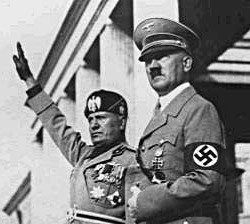
The New York Times Sunday Review recently had yet another article comparing Donald Trump with Adolph Hitler. Trump also gets paired with the Italian dictator of the same period, Benito Mussolini. These comparisons make some sense given the horrible things Trump says, but miss an essential difference between Trump and these 20th Century dictators: physical courage.
During World War 1 Hitler
volunteered to be a courier in the trenches, one of the most dangerous jobs in
a war of mechanized slaughter. Mussolini
was 33 years old when Italy entered the war. He volunteered to be a
private, a front-line soldier. Mussolini was in the trenches on the front
lines with young men half his age. Then
he was badly injured when the howitzer he was assigned to exploded. He went through a long and painful
recuperation with many operations to remove shrapnel from his body.
Both Mussolini and Hitler served
jail time for their grabs at political power and when it came time to take power,
they both were resolute at holding out for full power, not compromising.
Also, Mussolini took power in Italy at age 39 in 1922. Hitler took power
when he was 44 in 1933.
By contrast Donald Trump hid from
the draft and never missed a cocktail hour for his political views.
Physical courage and relative youth made Hitler and Mussolini even more
dangerous than their lust for power and horrible beliefs. By contrast,
Trump is a flaccid old man who let another man serve in his place during the
Vietnam War and expresses his manhood with lawsuits.
Hitler and Mussolini are two of
the worst people ever to disgrace the human race, but they were not
cowards. When their countries were at
war, they signed up to be on the front lines. When Donald Trump’s country was
at war, he signed up for college and let another man go in his place.
Cowards are haunted by their
cowardice. When Trump slammed John
McCain and all Prisoners Of War, Trump was acting as any coward would. By tearing down someone truly brave, Trump
could tell himself he is better. Trump
may sound cynical or crazy, but much of what he says is just the self-talk that
bubbles out of the cauldron of insecurities in his craven guts.
Even if he does not become a tyrant himself, Trump inspires people who want authoritarian government and he paves the way for their evil designs. Trump may not be Hitler or Mussolini, but he is dangerous.
[NOTE from July 2016]
***After I posted the following essay, three very smart people showed me a big thing I missed in asserting that Trump is neither Hitler nor Mussolini. That is, Trump sets up the conditions for tyranny and appeals to people who want authoritarian government. So even if Trump does not become a dictator himself, he sets up the conditions for tyranny. Really, he is doing so now by stoking anger for his own purposes when a sane leader would aspire to lead the entire nation. It's well to remember in this connection that Hitler never had the support of more than a third of Germans before his power grab in 1933. The SS and the Gestapo raised his "popularity" after that. Trump, in one friend's view, is the "gateway drug" to tyranny. I think he is right.***
Subscribe to:
Posts (Atom)
Partly Strong, Partly Broken by Nathaniel Popkin
Nathaniel Popkin’s Partly Strong, Partly Broken is a novel about a Jewish congregation, but it is really about the much larger question o...
-
When I re-enlisted in the Army in 2007, I saw several soldiers with Μολων Λαβε tattoos and Μολων Λαβε stickers on their pickup trucks. I...
-
Tasks, Conditions and Standards is how we learn to do everything in the Army. If you are assigned to be the machine gunner in a rifle squad...
-
The map of the divided America in"Civil War" The new movie Civil War is a love letter to journalism, maybe a little too mu...