Showing posts with label chemistry. Show all posts

Tuesday, March 10, 2026

Women in Their Element: Selected Women’s Contributions to the Periodic System by Annette Lykknes and Brigitte Van Tiggelen (Editors)


The periodic table is often presented as a clean grid of discovery—elements appearing one by one through the insight of famous chemists. Yet the real history of chemical discovery is far more complex, collaborative, and human. Women in Their Element: Selected Women’s Contributions to the Periodic System brings that complexity vividly to life. Edited by Annette Lykknes and Brigitte Van Tiggelen, the book is both a scholarly reference and an engaging collection of stories about the women who helped build modern chemistry—sometimes celebrated, often overlooked.

Rather than presenting a simple chronological list of discoveries, the editors organize the book around themes that shaped the development of the periodic system. This structure works especially well. It allows readers to see how discoveries emerged not only from individual insight but also from evolving scientific fields such as radioactivity, spectroscopy, analytical chemistry, and instrument development. By grouping the chapters around these themes, the book shows how scientific progress unfolds through networks of researchers, laboratories, and technologies.

The most famous figure in the book is, of course, Marie Curie, whose work on polonium and radium stands among the most important discoveries in modern science. Yet one of the book’s great strengths is that it moves well beyond familiar names. Readers encounter a wide range of women who contributed to identifying, isolating, measuring, or characterizing elements. Some were collaborators whose work was overshadowed by male colleagues. Others were pioneers in laboratory techniques or instrumentation that made later discoveries possible.

In many cases these women worked under conditions that limited their formal recognition. Scientific institutions in the nineteenth and early twentieth centuries often barred women from academic positions, societies, and prizes. As a result, their contributions frequently appeared under the names of male supervisors or collaborators. Women in Their Element does not simply seek to “correct” the historical record by adding forgotten names; it demonstrates how scientific discovery itself is collective. Element discovery often depended on teams, assistants, and technical specialists whose work rarely appeared in headlines.

One of the pleasures of the book is its attention to the practical side of chemistry. The discovery of new elements was not only a matter of theoretical insight but also of laboratory skill and technological innovation. Instruments for detecting radioactivity, methods for separating rare earth elements, and improved analytical techniques all played decisive roles. By highlighting the women involved in developing these tools, the book expands the definition of what counts as scientific discovery.

Another delightful feature is the book’s extensive index of elements. Readers can trace where particular elements appear in the narrative, including historical placeholder names such as “eka-boron” or “eka-tantalum”—the temporary predictions used by Dmitri Mendeleev before those elements were actually discovered. The index even acknowledges the older philosophical “elements” of Aristotle—earth, air, fire, and water—reminding readers that the search for fundamental substances stretches back long before modern chemistry.

The time span of the book is impressive. The story begins in the early modern scientific world of the seventeenth century and continues through the twentieth century into the present. Along the way readers encounter changing laboratory practices, evolving theoretical frameworks, and the gradual expansion of opportunities for women in science. This long view makes clear that the history of the periodic system is not a closed chapter but an ongoing scientific project.

What makes Women in Their Element particularly satisfying is that it works on two levels. It serves as a reference work for historians of science and chemists interested in the development of their field. At the same time, it reads easily as a collection of narratives about persistence, ingenuity, and intellectual curiosity. The individual stories are engaging in their own right, yet together they form a broader picture of how the periodic table came to be.

For readers interested in chemistry, scientific history, or the hidden contributors to major discoveries, this book is both informative and enjoyable. It reminds us that the periodic table—one of the most iconic images in science—was not built by a handful of famous names alone. It emerged from the work of many minds, many laboratories, and many lives devoted to understanding the elements of the natural world.


Tuesday, March 28, 2023

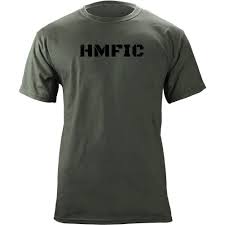
Friend Gets Top Job: He Now Knows He Is An HMFIC


Mike McCoy, Interim Editor-in-Chief
Chemical and Engineering News

Today I ran into a friend I have known and worked with since the 1990s at a conference in Indianapolis.  As we talked I found out he had recently been named Editor-in-Chief of Chemical and Engineering News magazine.  In his self-effacing way he told me that his promotion was because so many other high-level editors left recently. But he is and always has been a leader able to manage and get great results from a staff of creative people--one of the more difficult management gigs there is.

I first met Mike when he was named the managing editor of Chemical Market Reporter in the late 1990s. That magazine was, at the time, one of five global weekly chemical news magazines. It began as the Oil, Paint & Drug Reporter in the 1870s. Mike managed 20 columnists who covered various markets when many chemical companies still had offices in or around New York City.  

Mike was young and his staff was younger, mostly recent grads of journalism school. They wanted a journalism job in New York. Many of them worked for a year, wrote 50 columns and moved on the other magazines in the chemical news area or business press.  Mike and I talked about staff turn over and management. Half the staff went to new jobs in an average year, but Mike could remain calm dealing with constantly hiring and anticipating the loss of his best writers. His magazine had the lowest pay in the chemical industry, so he knew he was training writers for better-paying jobs.

Years later he moved to C&EN managing the business office located then in New Jersey, now in NYC.  He managed a very stable staff of writers there for more than a decade. Now he has the top job in the Washington-based magazine, at least for a while.  

Mike and his staff gave me a going away party when I went to Iraq 2009. I brought Army field rations so some of the food could be real Army cuisine.  

Since I have known Mike for so long and only in leadership jobs, I was surprised that I told him only today with this new job that he is an HMFIC (Head MF In Charge, the Army generic term for anyone in charge at any level.)

Congratulations Mike--Interim Editor-in-Chief and lifelong HMFIC.


Wednesday, January 26, 2022

Book 4 of 2022: Biography of Fritz Haber, a French Graphic Novel

Fritz Haber 1. The Spirit of the Times.

I just finished the first of three volumes of a graphic novel biography of the German Jewish chemist Fritz Haber.  He is a Nobel laureate and a German patriot who died in exile just after Hitler took power.  

He invented the process for taking nitrogen from the air and making fertilizer. We would not have a world population of seven billion now without Haber.  Not a quarter of that.  But that invention also meant Germany could fight for four years in World War I instead of running out of gunpowder in the first six months.

Billions fed, millions dead.

This first volume traces Haber's life until the first decade of the 20th Century. The great and the terrible years are in the next two volumes.  

A short biography of Haber is below in an article I wrote for Chemical Engineering Progress  magazine in 2004.

------

First three books of 2022:

Unflattening by Nick Sousanis

Marie Curie  by Agnieszka Biskup (en francais)

The Next Civil War by Stephen Marche


Wednesday, January 12, 2022

Book 2 of 2022: Marie Curie--a graphic novel biography in middle-school-level French

(In past years I have written an essay about the books I read in the previous year.  As my list of books gets longer and my memory shorter, I decided to write about the books as I read them rather than 2000+ words at the end of the year.)


In November I visited the Institute Curie near the Sorbonne in Paris.  This book was on the shelf in the tiny bookstore inside the small museum.  I read kids books in French to keep some level of reading comprehension.  This graphic novel gave me a chance to practice French and to remember what I learned about the life of this remarkable scientist.  

I learned a lot about Marie Sklodowska-Curie's life because more than half the book is about her childhood in Poland and struggles to get to France to study physics.  When I read about her previously, it was about her research and life-saving work in World War One.  

After I finished the book, I looked up how many people have won Nobel Prizes:  962 laureates earning a total of 603 prizes (as of 2020).  Just 59 laureates are women and Marie Curie is the first.  

Just four laureates have received two Nobel Prizes:  

Linus Pauling won a chemistry prize and a peace prize.

John Bardeen won the Nobel twice in physics.

Frederick Sanger won two chemistry prizes.

Marie Sklodowska-Curie won the Nobel Prize in physics and in chemistry: the only person to be awarded to Nobel Prizes in two different fields.  She is extraordinary, even among the short list of multiple Nobel laureates.  

If you read French at all, the book is fun to read and not difficult.  

The summary on Goodreads:

Cette biographie de Marie Curie (1867-1934) retrace les principales étapes de son existence : son enfance en Pologne, sa scolarité studieuse et ses études supérieures, son arrivée à Paris, sa rencontre avec Pierre Curie, ses recherches sur le radium et ses découvertes sur les rayons X, l'obtention de ses prix Nobel en 1903 et 1911 et son engagement pendant la Seconde Guerre mondiale.


Reading Moby-Dick After a (Late) Life at Sea (Mostly in Books)

Few novels have the global reputation of Moby Dick . Readers around the world consider it a monument of American literature —a small ship ci...