Showing posts with label The Prince. Show all posts

Saturday, November 22, 2025

Discourses on Livy by Niccolo Machiavelli--The Longer and More Complete Version of The Prince


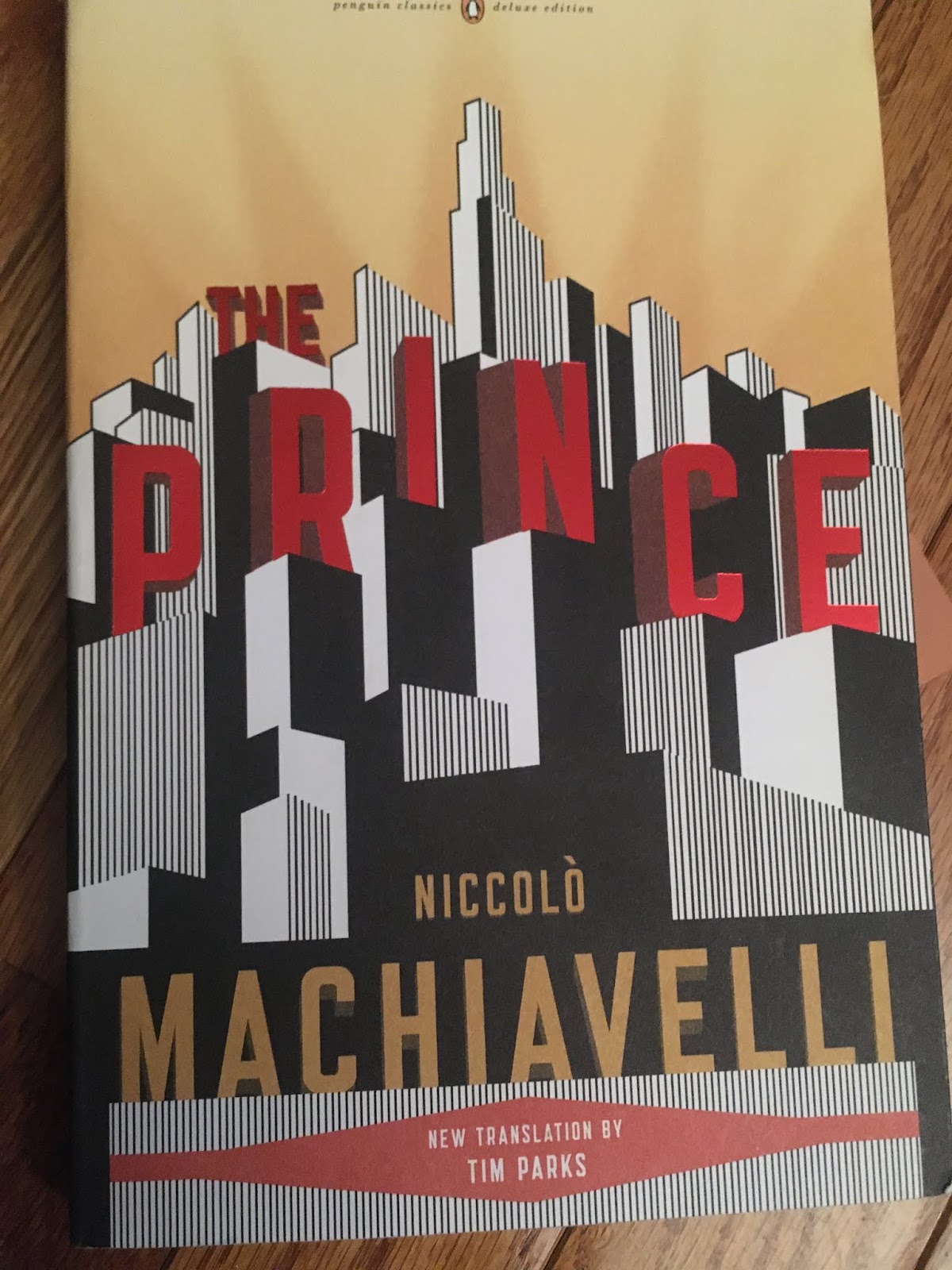
Machiavelli’s Discourses on Livy is the book where his real political mind is on full display. The Prince gets all the attention because it is sharp, cruelly observant, and short. But the Discourses—sprawling, rigorous, and grounded in the history of the Roman Republic—shows the full range of what he understood about politics, institutions, and the unpredictable push and pull of human ambition. Reading it after years of re-reading The Prince is like seeing the other half of the puzzle of politics.  I read The Prince every four years from 1980 to 2024. 

Where The Prince analyzes how rulers seize and hold power, the Discourses tackles something more ambitious: how free states are born, how they endure, and why they decay. Machiavelli uses Livy’s early books on Rome as his framework, not because he is nostalgic or idealistic, but because Rome’s long run of success offers hard lessons for every republic. He praises their mixed constitution, their willingness to balance competing interests, and their acceptance that conflict—especially between elites and the common people—is not a flaw but a source of vitality. That alone makes Machiavelli feel modern: he rejects the fantasy of harmony and insists that real politics is friction managed, not friction eliminated.

What stands out most in the Discourses is the same clarity that makes The Prince so readable. Machiavelli writes with a cold eye for how people behave, not how they ought to behave. His central conviction doesn’t change: ambition, fear, honor, resentment, and self-interest drive political life far more than abstract ideals. That blunt realism is exactly why Hannah Arendt drew on him in On Revolution. She recognized what Machiavelli saw clearly: republican liberty survives only when citizens are involved, vigilant, and willing to defend it. Passivity is fatal. Corruption metastasizes when no one resists it. A republic dies when its people stop caring enough to fight for it.

The Discourses also broadens Machiavelli’s view of power beyond single rulers. He analyzes why Rome rotated offices, why it punished powerful men who threatened equality before the law, and why it preserved civic religion and public rituals—not out of piety but because they reinforced unity and discipline. He argues that law is stronger than any prince because institutions outlast personalities. In that sense, the Discourses is a manual not just for leaders but for citizens who want their republic to endure.

For a reader who already read The Prince many times, the Discourses lands with a different kind of force. It confirms that Machiavelli wasn’t simply the teacher of tyrants he’s often caricatured to be. He was a defender of republican self-government who understood its fragility. His realism doesn’t smother hope—he just refuses to build that hope on illusions.

Reading the Discourses after years of reading The Prince I feel I missed a dimension of Machiavelli's thinking. I should have read Discourses decades ago. One book explains how power is taken; the other explains how political freedom is preserved. And in both cases, he tells you exactly how things actually work. No moralizing, no Platonic ideals, no Utopias—just the hard, clear truths of political life.

-----

My favorite translator of The Prince is Harvey Mansfield. Here is a sample of that translation with Machiavelli's advice on avoiding flatterers.  


Saturday, January 18, 2020

Re-Reading "The Prince" for the 10th Time: So Different Under Trump


Since 1980 I have read and re-read The Prince every four years. I have been delighted anew each year as I read his advice to rulers.  His central advice:

"A ruler must take power and keep power because without power the ruler can do nothing."

Until this year, reading Machiavelli was an act of cultural translation as well as being translated from 16th Century Italian.  I was reading advice to a monarch as a citizen of a republic.

That was then.

This year when I read The Prince I was reading as a citizen of a republic which is slouching slowly towards authoritarian government.

With Trump in office, I don't have to translate into democracy. His every instinct is authoritarian, so he grasps for power. He is limited only by his own willful ignorance and laziness.  But that limitation is glaring.

Machiavelli said the leader should constantly study war.  He recommends the leader go hunting to allow him to see his land up close and to know how it feels to live off the land.  Trump could not be farther from this advice. He is soft, delicate with no exposure to hardship, so some of the pathetic errors he makes would be remedied if he were not a physical and moral coward.

Trump wants to control and close the southern border.  If he spent time on the ground on that border, many of the issues would be clear to him.  The blazingly stupid foreign policy of abandoning the Kurds would not have happened if he were capable of exposing himself to hardship.

Thankfully, he is a gelatinous coward. Many of my worst predictions of what Trump would do have not come true, overwhelmed by Trump's own aversion to actual hardship.

Machiavelli says people are cowards and fools for the most part. They will swear loyalty to the leader when times are good and desert him when times are bad.

Trump knows and believes this. There are things Trump does exceedingly well because he knows he is talking to fools.  Machiavelli says the leader need not have actual religious faith, all that matters is the appearance. Despite bragging about breaking every commandment and being entitled to break every commandment, he draws thunderous applause from white Evangelical and conservative Catholic audiences.  The gaggle of millionaire televangelist that gather around to worship Trump declare Trump's true faith.

Machiavelli says that the leader must never use half measures. He must either pamper people or destroy them.  He also said if the leader has a choice either to be loved or feared, he should choose fear, because people will easily betray love but respect those who can hurt them. Within the Republican Party leadership, loyalty to Trump is based on fear of his twitter account.  In a party where the primary is the election, a Trump tweet can end the career of any red state Republican.

Another glaring Trump failure from Day One has been his inner circle. Machiavelli says we can judge the quality of a leader by the quality of his inner circle.  In this Trump is beyond pathetic.  Steve Bannon, Sebastian Gorka, Betsy DeVos, Rudy Giuliani, Kellyanne Conway, Roger Stone, Paul Manafort, Mike Flynn, the rogue's gallery is endless. Trump's deplorable quality is evident in those who surround him.

Chapter 23 of The Prince says the leader should avoid flatterers.  This advice is pathetically funny. The vile chief of flatterers Mike Pence leads the worship of the Dear Leader. Kissing Trump's dumpy rump is a requirement for continued service in the administration.

Machiavelli ends his little book discussing fate and luck.  America has been lucky for nearly two and a half centuries to avoid the incarnation of idiocy that is Trump, but now it's here. Trump has been lucky at every step of his improbable rise from failed casino owner to the Racist-in-Chief.  Can his luck hold? I wish him and his minions nothing but failure, but the odds are with an incumbent, so I will fight until he is out of office.  And I will look for other places to live that will accept Americans and re-read The Prince in 2024 from somewhere far away from Don Junior's 2024 campaign.

In the meantime, I am re-reading On Tyranny for how to handle the present.


Natzweiler: The Only Nazi Death Camp in France

  Natzweiler-Struthof was the only major Nazi concentration camp built on French soil, perched high in the Vosges Mountains of Alsace . Its...