Saturday, June 11, 2016

Enlistment Extended for the Duration

My father enlisted in the Army in December of 1939.  His enlistment was for just two years.  He was planning to get out in December of 1941.  In a very early version of the infamous Iraq War policy known as "Stop Loss," Dad was "extended for the duration" of the just declared war on Japan, Germany and Italy.

Dad and thousands of other soldiers in the peacetime Army of 1941 remained on active duty until late 1945 or 1946.

Except for Stop Loss the long Iraq and Afghanistan Wars did not stop discharges after a normal enlistment period of three or four years.  It was another way that these terrible wars were so different from World War 2.

By the time the war ended nearly fifteen million Americans were serving uniform.  Soldiers got leave, rotated home, but the rule was everyone served for the duration.

Among the many things wrong with Iraq, Afghanistan and Viet Nam was the partial commitment.  Even though my Dad never left America, he knew he would be serving until all of our enemies surrendered.

The current war could end anytime between next year and 2024.  I hope if we go to war in the future, we will have an enemy and the whole nation will have a part in defeating that enemy.  

The Greek word that is at the root of Patriotism is Patria--patriotism is a fellowship based on love of country.  In World War 2 millions of families had soldiers serving in the war.  Many of those families ate less meat and sugar and used less gas as part of the war effort.  Wars should have a price--so we can decide whether or notr we want to pay that price.


Thursday, June 9, 2016

Command Sgt. Major Christopher Kepner Named Top NCO of Army National Guard


In a ceremony yesterday one of my favorite people in the Army was named the top sergeant of the Army National Guard.  Christopher Kepner is now the Command Sergeant Major of the entire Army National Guard.

He will move to Arlington, Va., and serve full time in his new job.  You can read my interview of Kepner here. He is a strong leader and has strong opinions on leadership.  The fist time I heard him speak it was at a leadership meeting for all the sergeants in the 28th Combat Aviation Brigade:

He led an NCO Development course for all the sergeants in the brigade.  He began that course saying,
“You need to do only two things to be a leader in the United States Army. 
First, keep the men safe as much as possible.
Second, make sure your soldiers maintain standards in every area.
And how will you know if you are doing these two things?
You will eat lunch by yourself for the rest of your career.”


Book 14 of 2016: The Elements of Style by William Strunk and E.B. White


“If you have any young friends who aspire to become writers, the second greatest favor you can do them is to present them with copies of The Elements of Style. The first greatest, of course, is to shoot them now, while they’re happy.”

― 
Dorothy Parker
 
In 1978, Clint Swift, a staff writer on the Stars and Stripes newspaper in Darmstadt, West Germany, acted on Dorothy Parker’s advice and gave me a copy of The Elements of Style.  Click on Clint's name for a longer version of that story.

In the four decades between then and now, I have re-read Strunk and White at times when I start to learn a new language and when the self doubt common to all writers starts to attack my mind.  The Elements of Style, like a good coach, reminds the player that practicing fundamentals is the way to stay at the top of one’s game. 

I also start to use “one” as a pronoun after re-reading Strunk and White because it is the original and best gender-neutral singular pronoun and is a lovely, if stuffy, way around saying “he or she.”


If you are not a writer, or don’t aspire to be a writer, reading this book is like reading about the specific rules for a sport you don’t actually play.  It can be interesting, but will be not captivate. 
For a writer who has wrestled the alligator of grammar, the wit and brevity of Elements of Style will help you navigate the choppy waters of fluency.  

Monday, June 6, 2016

How the Military Draft Works--Just in Case it Comes Back


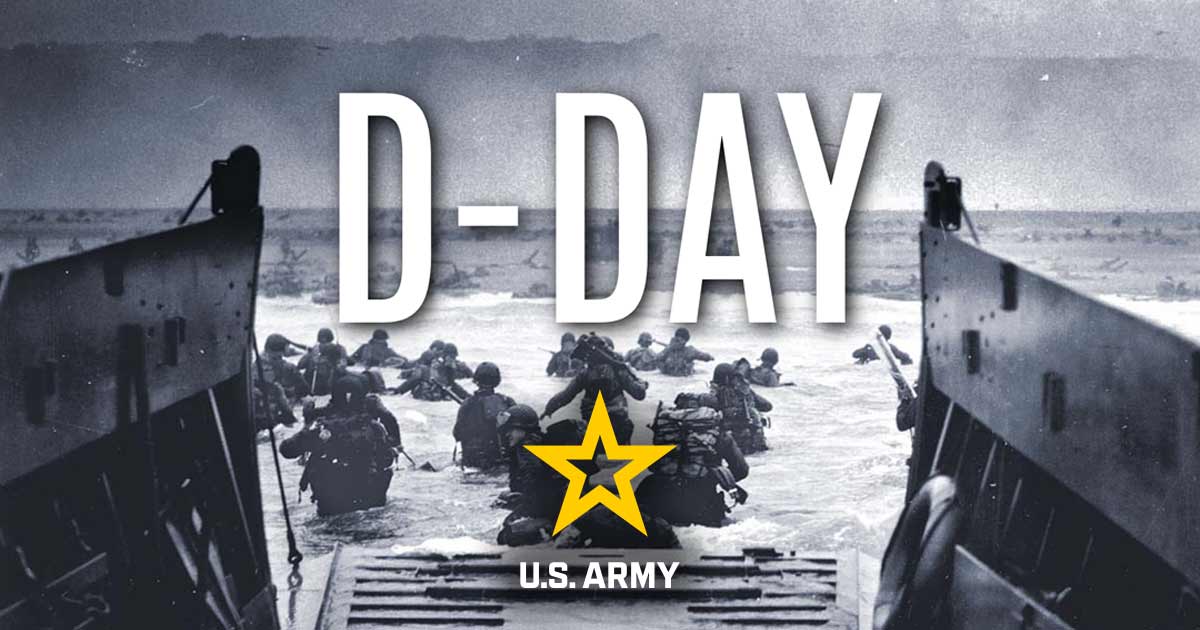
Today is the 72nd Anniversary of D-Day, the biggest amphibious invasion in world history.  The brave men who fought and died that day were a mix of volunteers and draftees. Whether they volunteered to go or were told by the government to report for duty, they led the way to free Europe from the Nazis.

From the comments I have received recently when wrote about the draft, it is clear the commenters don't understand how the draft works.  From a very good Wikipedia article on the subject, here is the key line on how the draft works:

From 1940 until 1973, during both peacetime and periods of conflict, men were drafted to fill vacancies in the armed forces which could not be filled through voluntary means. 


The military draft is just one part of the effort to recruit soldiers, sailors airmen and Marines (This is not a typo, Marines is a proper name, the others are adjectives, very cagey on the part of Marines). Whether there is a draft or not, if enough people volunteered to serve in the military to meet the national quota, the draft would effectively end.

One of my commenters was furious at the idea that someone would take the place of a person who got a deferment, but that is exactly what happens.

Let's say the Army needs 100,000 new recruits for the year 2025.  They have enough drill sergeants, enough barracks and enough equipment to feed, clothe and train these soldiers.  If there is a draft, the Army recruits all the soldiers it can, then fills the rest of the vacancies with draftees.

In many countries there are few or no deferments, especially for healthy young men.  But in America, deferments were rampant in the Vietnam War era.  When a draftee claims a deferment, the Army reaches further down into the eligible draftees to fill that place.

So if the Army recruits 75,000 and wants 25,000 more, they will send draft notices to the top 25,000 draft eligible people.  When 10,000 get deferments, the Army sends out 10,000 more notices, and so on until the quota is filled.

Whatever the excuse, whether the draftee is Amish or just too cute to crawl in the mud every deferment means the space is filled by another person.  So not only does someone take the place of everyone with a deferment, but they take the place of that draftee in the first year.  If, like the current Presidential Candidates, they took multiple deferments, the man who took their place went to the Army in the same year as the first deferment.

Without the draft, the Army has to change and lower it standards to fill its ranks.  The only way I was able to re-enlist at 54 was because the Army raised the maximum enlistment age to 42 in 2007 and lowered it again in 2010.  In 2007, the Army was desperate for recruits, so they raised the recruiting age, and lowered standards for education.  I got in.  If there was a draft, I would not have had a chance.  An 19-year-old would have taken that place.

Recruiting is a zero-sum game.  If the draft comes back and the government allows Vietnam era deferments, then poor kids will take the place of rich kids, just like during the Vietnam War.  And yes, the draft is a zero-sum game.  Open spaces will be filled.  And they will be filled by those who have no means to avoid the draft.


Partly Strong, Partly Broken by Nathaniel Popkin

  Nathaniel Popkin’s Partly Strong, Partly Broken is a novel about a Jewish congregation, but it is really about the much larger question o...