Saturday, November 18, 2017

Cold War Hero Who Served After 1991

Armand Lattes, Professor Emeritus of the University Paul Sabatier, Toulouse

When the Soviet Union collapsed in 1991, the world faced a plethora of problems. In retrospect, the world did not handle the demise very well. Russia and the other former Soviet states were broke and in collapse and armed with uncountable Weapons of Mass Destruction.  

In the 1940s and 50s, before the Soviets had nuclear weapons, their counter weapon to American and European nukes was nerve gas and other chemical weapons.  The Soviets manufactured thousands and thousands of tons of chemical weapons and stored them for the Doomsday attack.

In 1992 these un-dropped bombs and un-fired shells were rusting and leaking in storage across the former empire that had no money.  If these chemicals leaked into waterways and into the air, illness and death would spread through and out of the former Soviet Union. 

The answer to the problem was a massive, long-term decontamination program.  One of the chemists who volunteered for this dangerous work was Professor Armand Lattes of the University Paul Sabatier in Toulouse. Every September from 1992 until I met him in 2006, Lattes flew to secret sites in the former Soviet Union and worked with international volunteers to neutralize this terrible stockpile of weapons.  Lattes continued his unheralded work for several years after we met until his  retirement.  

I kept in touch with Armand in the years since and still hope to visit him and his wife Isabelle at their home in Toulouse. I almost made it to Toulouse on my trip around Europe last summer, but never got to that part of France.  

When we hear of the latest terrorist attack on the news, we know that dozens more attacks were foiled by law enforcement working secretly to disrupt the terrorists.  Armand and the men and women he worked with saved countless lives and the world itself from the disaster of chemical weapons leaking into the air and water or being stolen and used by terrorists.  

Armand did his part to keep the weapons of the Cold War from killing after the demise of the Soviet Union.


Saturday, November 11, 2017

Why is Veteran's Day Today? Who is a Veteran?


Almost 20 years ago when I had been a bearded civilian for more than a decade and was still almost ten years away from re-enlisting, I worked for a company with offices on five continents.  I went overseas every month for the three years I worked there.  In 1999, I was talking to one of my co-workers about my upcoming to several countries in Europe in mid-November.

I told her I would be in Paris, then Belgium, then I would have a meeting in Dusseldorf on the 11th before flying on to Singapore.  She said, "You can't meet on the 11th, it's a holiday."

"Not in Germany," I said.

Armistice Day, as it is know in Europe, is celebrated by all those on the winning side in World War I, it is a regular work day in Germany.

She didn't know that Veteran's Day is when the Armistice that ended World War I was signed in Versailles.  At 11 minutes after the 11th hour of the 11th day of the 11th month of the year, the war officially ended in 1918.  So the observed holiday can be moved, as it was this year, to give government and other workers a day off, but the actual holiday is the 11th of November.

Until 2009, I did not consider myself a veteran.  I had served during the Vietnam War, but not in the war. I served in the Cold War on the East-West border, but that war stayed cold until it ended.  It wasn't until I deployed to Iraq in 2009 that I became an actual veteran.

Murrie Hubbard, the only other person from my 1971 Stoneham High School class to enlist during the Vietnam War, went straight to Vietnam and was a civilian again by 1973.  He was a veteran. I tested missiles in Utah, I was not a veteran.  Four decades later we both are veterans.

Wednesday, November 8, 2017

Field Guide to Flying Death: MAD--Mutually Assured Destruction


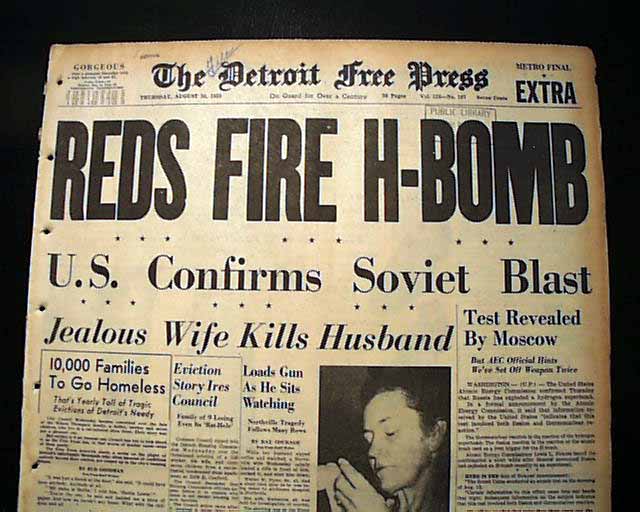
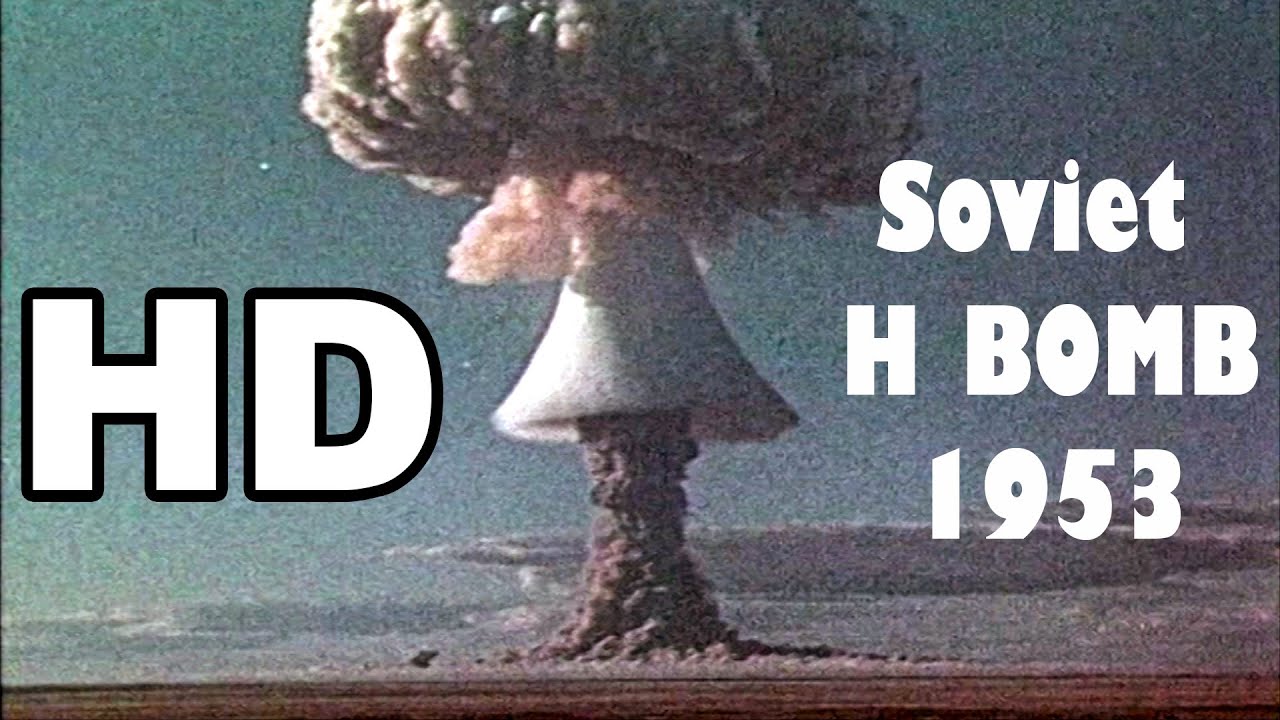
The 60s was the heyday of “Mad Magazine” and MAD as the centerpiece of our Cold War strategy. MAD—Mutually Assured Destruction—became the plan to preserve the future of the world once the Soviet Union first tested a hydrogen bomb in 1953. 


The US and the Soviets amassed so many nuclear weapons during the 50s and 60s that using them could only result in the destruction of the entire world, as we know it. 

Since the end of the Cold War, nuclear war remains in the unthinkable category, but for the fundamentalists who see the world as the stage for their own particular apocalypse, the unthinkable is not so unthinkable.

The Russian Federation still controls thousands of nuclear weapons, but the danger has shifted away from the Cold War scenario of one of the superpowers attacking the other. Then the world worried about living under the threat of a Superpower nuclear war.  Now the world worries about nations and terrorists who don’t care about MAD setting off a nuke because they want to kill everybody who does not see the world as they do. 

In the midst of Cold War, Hannah Arendt wrote the book “On Revolutions” talking about the rise in revolutionary thinking from the Reformation through the American and French Revolutions to the permanent state of revolution that characterizes the modern world.  We can no longer rely on MAD to constrain the nuclear arsenal. Superpowers cannot divide the world into client states they can control. 

MAD will not protect us. The overwhelming nuclear arsenal we have is not a threat to someone happy to die to bring on their personal apocalypse, or to the thug in charge of North Korea who will happily sacrifice his people on the altar of his own ego. 

In a world of revolutions, our security agencies have to doggedly keep track of all existing nuclear weapons to make sure a terrorist never gets one. 

I liked the Cold War draft army I served in better than the current all-volunteer army and, I admit, I liked the MAD world a lot better than the current threat of a nuke delivered in a truck or a shipping container.  


Breath by James Nestor: We All Breathe Badly!!

As a book, Breath works because it sneaks physiology in through storytelling. Nestor uses explorers, monks, athletes, dentists, and oddbal...