Friday, July 8, 2016

Soldiers Hate the Media, Even When They Work in Public Affairs

Almost every soldier I have ever worked with, even soldiers in Military Public Affairs, hate the media.  I could understand it when I first worked in Army Public Affairs in Germany in the late 70s.  Most of the public hated the military and many reporters made careers pointing out every flaw in the military during and after the Vietnam War.

But when I returned to the Army in 2007, I joined an Army that was loved by the public and covered by reporters who reported good news at a rate I found incredible as a Vietnam-era soldier.

And yet just as during the Vietnam era, every soldier I spoke to at any length about the media, hated the media.  In fact, once I picked up a camera in Iraq and started writing a newsletter within our own brigade, half the soldiers in the unit regarded me as part of the media.  Everything I wrote for that newsletter was reviewed by battalion or brigade headquarters.  But I was the media.

In 2013 in one of the many ironies of my career, I actually went to the Defense Information School (DINFOS) at Fort Meade, Maryland.  For three months I learned how to take pictures and write to military standards.  Since I worked in public affairs as a civilian for nearly 30 years, a lot we were taught was not new to me.  My biggest surprise at school was my classmates and teachers.  Most of them liked the media no better than pilots, door gunners, grunts and mechanics. One major I worked with regularly was as suspicious of the media as anyone I ever met.  Some of my DINFOS classmates were openly hostile to the media.
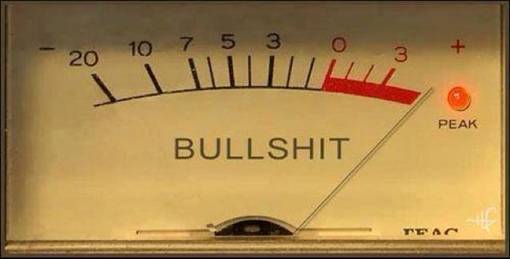


Many civilians in public affairs, particularly those in media relations, are like me.  They wanted to be reporters, but decided the pay and future were so bad that they went into public affairs.  Also, one important thing I lacked that is necessary for a good reporter is an internal Bullshit detector.  My default setting is optimism.  My Army stories in the 70s and in Iraq were all about soldiers doing their job.  I could not investigate anyone.  So serious journalism was never possible for me.  After college, I found a job that kept me in contact with serious journalists.

My civilian job was mainly media relations in business media. I was in regular contact with very smart reporters who were paid a lot less than me.  I even helped a few find jobs on the "dark side" as public affairs is known among reporters.  I like reporters as a group and had good relationships with reporters throughout my career, some that lasted two decades or more.  Several reporters are still my friends even now that I am retired.

In civilian life, there is no question who is a reporter and who is in public affairs.  Nobody confuses the White House spokesperson with a White House reporter.  But in the Army, most soldiers of every rank from private to general think their own public affairs people are reporters.  Some of the military public affairs people I have known get into that career because the path they actually wanted was blocked.  Some are simply assigned to do something they really don't want to do.  Both in Germany in the late 70s and since returning to Army Public Affairs in Iraq, I have met very few soldiers who know the difference between Army Public Affairs and reporters, and very few soldiers in public affairs who actually like the media.

Wednesday, July 6, 2016

Every Thursday, I Shave My Legs--Even in Iraq


Since one of my first big bike crashes in 1994, I have shaved my legs every week, usually on Thursday before racing on the weekend.  I started riding seriously in 1989, but resisted shaving my legs until the crash at the Tuesday Night Training Race. I continued to shave my legs throughout my deployment to Iraq in 2009.  I rode 5,100 miles on Camp Adder, Iraq, so it made sense to keep removing my leg hair.

So why do bicycle racers and most serious cyclists shave their legs?

Crashes.

In 1994 I crashed at 25mph on a rough road surface. I had deep cuts on my right side from my shoulder to my ankle.  The worst was almost two square feet of shredded skin on my right thigh.  Inside all of those cuts was the shaggy hair from my hirsute legs.  I cleaned and disinfected my injuries, but within a few days, the big red mess on my right thigh was oozing green.

My doctor, General Internal Medicine, rotates many residence through the practice.  That day I had a young, fit doctor doing a month-long family practice residency.  He took a lot of care cleaning my many injuries.  He prescribed antibiotics, then he leaned back, folded his arms and said, "You're the first healthy person I treated in three weeks."

I thought this was funny.  I was bandages from ankle to shoulder.  This fit young doctor, like others I had met and have met since, got into family practice to care for communities.  But a quick scan of the waiting room anytime I am in the office says most of the practice is geriatric, bad lifestyle, or both.  He seemed ready to switch his specialty to sports medicine or surgery.

And speaking of treating injuries, my oldest daughter, Lauren, was 5 years old at the time and very happy to help me change bandages every day.  She was clearly disappointed when I finally healed up.  Lauren did her first race that year and from age 8 to 10 was part of a kids race series.  She was around so many bicycle racers as a kid she thought men with leg hair looked weird when she played sports in middle and high school.

After 22 years, I can't quite imagine having leg hair again.  I still race, so I still shave.


My Books of 2025: A Baker's Dozen of Fiction. Half by Nobel Laureates

  The Nobel Prize   In 2025, I read 50 books. Of those, thirteen were Fiction.  Of that that baker's dozen, six were by Nobel laureates ...