Tuesday, January 23, 2018

"Don't Judge Me!"


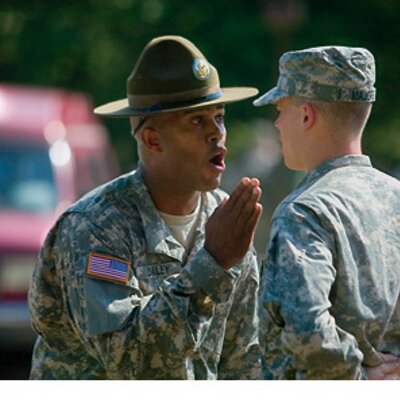
The drill sergeant is judging the soldier in front of him.


"Don't Judge Me!" was a phrase I heard more and more often in the last years I served in the Army National Guard.  It was often a surly young soldier telling her superior she was having a bad day and that's why her uniform, weapon, vehicle or work area looks bad.

Telling a sergeant or an officer not to judge you is like telling a wolf to be a vegan.

Not vegan......

When Jesus said, "Judge not....."it was both a warning and guide to the direction of a truly spiritual life, in the sense that it is a life emptied of concern for this world.

Anyone with expertise in this world judges others.

The essence of the warrant officer rank in the Army is someone who has considerable expertise in aircraft or trucks or weapons or administration.  That warrant officer judges everybody within the world of his shop, her hangar, his range, her office.

I have walked into a maintenance building and had a warrant officer gesture toward a mechanic who was trying to replace a turbocharger on a the V-12 diesel engine that powers Patton tanks. Along with the gesture he used the warrant officer signature phrase,

"Watch this shit."

The warrant officer allowed the mechanic to almost screw up the operation, then intervened to show the incompetent soldier how to "Unfuck himself."

One of the First Sergeants I served with in Iraq told me, "I can look at a uniform and how a soldier wears it, private or general, don't matter, and tell you that [soldier's] military career." 

I could not read an entire career from a camouflage uniform, but I could make accurate judgments in milliseconds about a soldier's current state of readiness for the job or mission at hand.  That's what sergeants do.  They judge you or they are asleep.

Judging is everywhere in life there is expertise.  My rule for watching movies is I don't watch movies on subjects in which I have expertise.  So I don't usually watch war movies.  Too many details from wear of the uniform to weapons that never run out of ammo drive me nuts.  And I judge.

So I watch movies about doctors, detectives, spies and sailors.  I have no expertise in these fields, so when a spy makes a glaring procedural error that would cause a cop to cringe, I am blissfully ignorant and enjoy the show.

Of course, this judgment ability is not just to enjoy assailing the incompetent, but for survival. I race bicycles. In races and in training, bicycles ride inches apart at speeds up to 50 mph.  Ten of my 34 broken bones happened in a split second at 50mph when I misjudged a pass I was making and in a few seconds was lying in a ditch bleeding with a broken neck waiting for a MEDEVAC helicopter.

Racers who ride in packs are judging each other all the time. It's a matter of survival. In a bicycle crash, the guy who causes the crash usually does not fall. The guy in front who brakes, or swerves, or drifts, clips the front wheel of the rider behind.  The rider behind falls. The rider in front keeps going.

When I hear or overhear someone asking, "Is she judging me?" I think, "How cute. You really think there is a chance she's not?"


Wednesday, January 17, 2018

My Dad, Estee Lauder and Dietrich Bohoeffer


In recent months I have immersed myself in my past in a way I have never done before. For a couple of months I have been writing about my life as a soldier.  I started out writing about my tank, but have since veered off into writing about Basic Training.  In military life, the transition from civilian to soldier is a change beyond every other change, even the change back from soldier to civilian.

In the past year, my Jewish identity has also emerged from some vague part of my past to a very present reality.

It would surprise no one, that as I write about my military past and learn more about Judaism and my Jewish identity, that my father would appear, sometimes vividly, sometimes in a whisper.  He was an American Soldier and the fourth of six sons of Jewish immigrants from Russia. (Now Odessa, Ukraine. They called it Russia.)

Among all of my family, my son Nigel has been most interested in, and my occasional companion on, my ventures exploring my past.

On Monday, the Martin Luther King, Jr., holiday, we visited the National Museum of American Jewish History in Philadelphia.

I particularly wanted to see an exhibit that was closing soon on the Russian emigration from the Soviet Union to Israel and America and other countries from the 1960s through the 80s. After Nigel and I walked through that exhibit, we sat in a viewing area on the first floor and watched a series of two-minute biographies of prominent Americans Jews of the last century.  When Sandy Koufax was on screen, I reminded Nigel that his grandfather pitched for the Reading Phillies in the 1930s.  When the biography of Estee Lauder began, the soft-voiced announcer said she was born in 1906, the same year as my father.

Estee Lauder, 1906-2004

The short video traced Estee Lauder's career making cosmetics. She began her business in the 1920s and continued to grow her business though the Great Depression and on to great success in the post-war years.  We watched a dozen more biographies, then took the Market Street El to 30th Street Station for the train home.

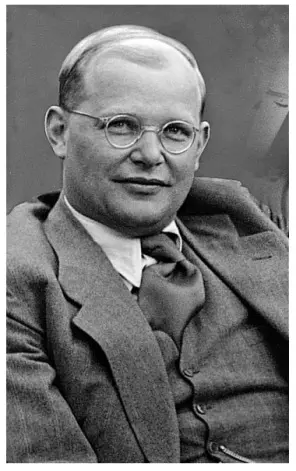
Dietrich Bonhoeffer, 1906-1945

As we waited for the train, I got an article from a Jewish activist friend about Dietrich Bonhoeffer. 
Bonhoeffer was in America in the late 1930s studying American spirituality.  With war looming and Hitler's attacks on Jews and other people of faith growing, Bonhoeffer left the safe haven of America in June of 1939.  In Germany he organized a Church for believers who were against Hitler and then joined the resistance. In the last month of the war, April 1945, Bonhoeffer was murdered by the Gestapo in the Flossenburg Concentration Camp. He was a German who fought Hitler and died with Jews.

In December, Nigel and I had seen a display of children from the Flossenburg Concentration Camp at the Museum of Jewish Heritage in New York.

While Bonhoeffer struggled against the Nazis in Germany, my father commanded a Prisoner of War Camp for 600 soldiers of the German Army's Afrika Korps. My father came home to Boston after the war with my mother who he met and married during the war in Pennsylvania. In one of those odd twists of fate, I live less than 30 miles from that Prisoner of War Camp which is now the Reading Airport.  Before he was commander of the POW Camp, my Dad commanded a Black Company. 

And in 2018, the Black grandson my Dad never met--George Gussman died in 1982--went to a Jewish museum on Martin Luther King, Jr. Day to learn about his family's history. 

My father and Estee Lauder were both children of immigrant Jews born in America in 1906. They lived long lives because their parents came here,  leaving countries that would be crushed by Hitler in the 1940s.  In that same year, 1906, a leading German family of scientists and thinkers added a son who would become a famous man of faith.  Bonhoeffer was offered shelter in America and turned it down to return to his people. 

These three lives share only a birth year and the admiration of a son and grandson who learned a little more about courage and the best of America on a day devoted to an American hero.


Monday, January 15, 2018

Nine Years Ago Today: Packing with an Army PowerPoint


In January of 2009 I was packing to deploy to Iraq with the 28th Combat Aviation Brigade. The five bags the Army wanted me to pack each had their own PowerPoint presentation. I packed more than I need, but a lot less than the Army told me to pack. 

In addition to deciding how much I would bring with me on the trip, I had to be careful about how much I would carry at once.  I had shoulder surgery on Halloween of 2008, just in time to be cleared to fly to Oklahoma for pre-deployment training on January 30, 2009. 

By January I was out of the sling, but still technically a No-Go.  I even had a No-Go Counselor to deal with the problem. Which I wrote about here.

God, Human, Animal, Machine by Megan O’Gieblyn, A Review

Megan O’Gieblyn ’s God, Human, Animal, Machine is not a book about technology so much as a book about belief—specifically, what happens to ...