Monday, November 27, 2017

Eight Years Ago: Remote Refueling Site Drama

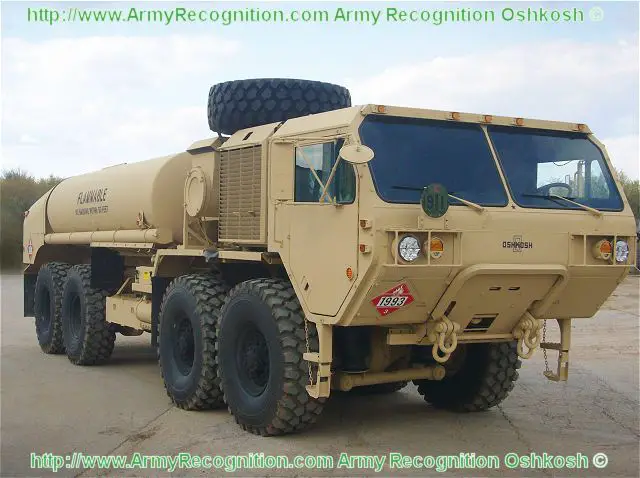
Army All-Terrain Refueling Truck HEMMT


Eight years ago, I was deployed in southern Iraq with an Army Combat Aviation Brigade. Among the nearly 2,000 soldiers were about 100 fuelers, the men and women who refueled helicopters. Some were stationed at our main base at Camp Adder, others were dispersed to bases all across the southern half of Iraq, from Camp Garry Owen on the Iran-Iraq border to Al-Kut to Basrah to Camp Normandy near Baghdad.

These remote detachments refueled helicopters at all times in all weather. Hours and hours of boredom could be broken up by a half-dozen Chinooks, Apaches or Blackhawks suddenly filling the fueling rigs. 

At Camp Normandy in the summer, one of the fueler sergeants made a pet out of a cat. Pets are against about a dozen regulations, but he managed to keep his new friend well hidden.  He named it Fluffy.  

One day in November 2009 he walked into the morning briefing visibly upset and announced, "We lost one of our own last night." The dozen soldiers in the room started whipping their heads around looking to see who was not at morning meeting.  Then someone yelled, "Who?"

The big sergeant said, "Fluffy! Somebody ran her over in the night.  She was stuck to a HEMMT tire this morning when I found her."

Several soldiers threw Gatorade bottles, a few threw helmets and chased the bereaved sergeant out of the tent.  


Refueling a MEDEVAC Blackhawk helicopter in Iraq, 2009


Monday, November 20, 2017

SPQR and America

Senatus Populusque Romanus
The Senate and People of Rome

Some of the soldiers I served with in Iraq talked about getting an SPQR tattoo.  "The Senate and People of Rome" was the motto of the Army of the greatest and longest lived empire in the ancient world. Although it's demise can be dated around 472 A.D. it arguably continued through the Roman Church and the empire in Constantinople through the present day.  The Roman form of government had a revival in the high regard our Founding Fathers had for Rome and its government.  The founders of America were sophisticated, multi-lingual men who thought Paris the center of civilization. They were men of the Enlightenment who thought theocracy and fundamentalism just as misguided as we think it is today.

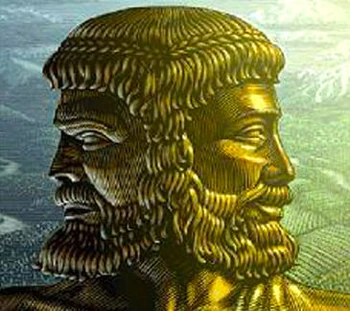
I thought about the tattoo as I started yet another book by Hannah Arendt, a collection of her essays titled Between Past and Future. The introductory essay begins by saying the title is a description of Janus, the Roman god of beginnings.

Janus, the god of beginnings looking forward and back

Janus is the god of the daybreak, of the first day of every month and the first month of the year: JANU-ary.  The doors of the temple of Janus (the "Gates of Janus") were closed in times of peace and open in times of war.

The essay reminded me that the early leaders of Rome, as well as emperors as late as Vespasian,  closed the doors of the temple of Janus with a great celebration marking victory.  The gates were, of course, opened when the Roman army marched to war.

The soldiers in Iraq who thought of getting the SPQR tattoo saw the American Army in Iraq and Afghanistan as a revival of the Roman Army, making us the modern legions of that Army.  With armies, ships, aircraft and space vehicles circling the globe, America is a more global army than Rome could ever have dreamed of.

The soldiers did not know, nor did I at the time, that the SPQR tattoo was not for native Roman soldiers, but for mercenaries, slaves and gladiators.  Tattoos were not for citizens and were considered something for the low classes. 

The Roman government brought the idea of justice for all citizens of an empire into practice for the first time in human history.  That government relied on both law and tradition to continue and thrive for most of a millennia.  It thrived with men like Marcus Aurelius, for me the best of all the emperors, and survived horrors like Nero.

America has not closed the Gates of Janus since August 1945 with the defeat of Imperial Japan shortly after defeating Nazi Germany. With the Cold War beginning in 1947 followed by the Gulf War and the War on Terror, we may never close The Gates of Janus again.


Saturday, November 18, 2017

Cold War Hero Who Served After 1991

Armand Lattes, Professor Emeritus of the University Paul Sabatier, Toulouse

When the Soviet Union collapsed in 1991, the world faced a plethora of problems. In retrospect, the world did not handle the demise very well. Russia and the other former Soviet states were broke and in collapse and armed with uncountable Weapons of Mass Destruction.  

In the 1940s and 50s, before the Soviets had nuclear weapons, their counter weapon to American and European nukes was nerve gas and other chemical weapons.  The Soviets manufactured thousands and thousands of tons of chemical weapons and stored them for the Doomsday attack.

In 1992 these un-dropped bombs and un-fired shells were rusting and leaking in storage across the former empire that had no money.  If these chemicals leaked into waterways and into the air, illness and death would spread through and out of the former Soviet Union. 

The answer to the problem was a massive, long-term decontamination program.  One of the chemists who volunteered for this dangerous work was Professor Armand Lattes of the University Paul Sabatier in Toulouse. Every September from 1992 until I met him in 2006, Lattes flew to secret sites in the former Soviet Union and worked with international volunteers to neutralize this terrible stockpile of weapons.  Lattes continued his unheralded work for several years after we met until his  retirement.  

I kept in touch with Armand in the years since and still hope to visit him and his wife Isabelle at their home in Toulouse. I almost made it to Toulouse on my trip around Europe last summer, but never got to that part of France.  

When we hear of the latest terrorist attack on the news, we know that dozens more attacks were foiled by law enforcement working secretly to disrupt the terrorists.  Armand and the men and women he worked with saved countless lives and the world itself from the disaster of chemical weapons leaking into the air and water or being stolen and used by terrorists.  

Armand did his part to keep the weapons of the Cold War from killing after the demise of the Soviet Union.


God, Human, Animal, Machine by Megan O’Gieblyn, A Review

Megan O’Gieblyn ’s God, Human, Animal, Machine is not a book about technology so much as a book about belief—specifically, what happens to ...