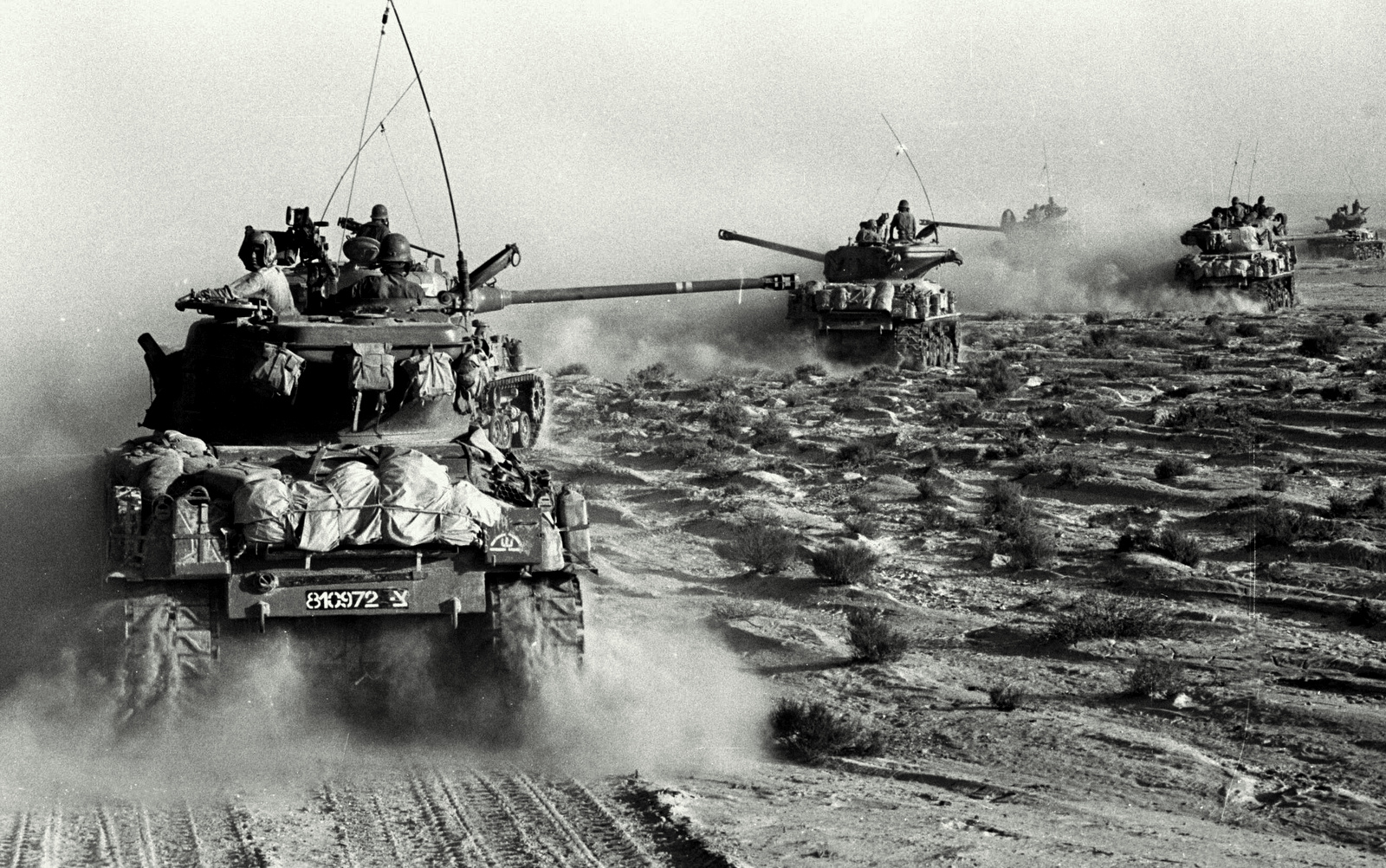
Israeli Sherman Tanks in the Sinai, Attacking Egypt
Ignorance Can be the greatest ally or the greatest enemy of an army at war. In the book
Six Days of War, Michael B. Oren explains in considerable detail how Arab ignorance and mistrust was the real key to the vastly outnumbered Israelis defeating three Arab armies in just six days.
Oren shows how the Israelis called up all of their reserves and prepared for weeks to attack Egypt before Egypt attacked them, or to defend if Egypt attacked first. And yet the Israeli attack on June 5, 1967, came as a complete surprise to the commander of the Egyptian Army.
The reasons are complicated, but Oren makes a strong case that Field Marshall Abdel Hakim Amer, supreme commander of Egyptian forces, filled the upper ranks of the Egyptian military with cronies, shoving aside talented leaders preparing for a coup against his childhood friend President Gamel Abdel Nasser.
The Israelis put Moshe Dayan in charge of the military just months before the war, another signal to anyone paying attention that the war plans were for an attack. Also, just months before the war, the Egyptians blockaded the Israeli port in Elat and all shipping. Time pressure pushed the Israelis to act, and yet, the Egyptians blustered and waited and did not prepare for an attack, let alone prepare for their own.
On June 5, nearly the entire Israeli Air Force attacked air bases all across Egypt. By the afternoon, more than 80% of the Egyptian Air Force was burning wreckage, most of it on the ground. Cratering charges made the airfields useless. At the same time, the Israeli Defense Forces (IDF) rolled into Sinai in a multi-pronged attack that succeeded so fast and so well that the most optimistic Israeli leaders could not believe it.
With so much of the IDF fighting on the ground and in the air in Sinai driving toward Egypt, if the Jordanian and Syrian armies had attacked, Israel would have to stop the attack and defend itself, at minimum pulling all air support away from Egypt.
Both the Syrians and the Jordanians had sworn mutual aid in case of attack.
But nothing happened. Iraq also was to attack in support of Egypt. It's forces sat in Jordan and Syria.
On June 7, fighting started near Jerusalem. The Israelis had no plans to recapture Jerusalem, but the Jordanians fired on the IDF from the Mount Scopus and other heights in Jerusalem. the IDF attacked to take out the guns and by the night of June 9-10, retook Jerusalem and had the Jordanian army, including the vaunted Arab Legion in full retrat all across the West Bank of the Jordan River.
During this period, the Syrians shelled Israeli settlements. The settlers on the frontier howled for help. On June 10, the IDF attacked in the North toward Syria. If the Syrians had attacked, the Israelis would have been obliged to stop their offensives in Jordan and Egypt. But the Syrians shelled civilians and stayed still. Their army, like the other two Arab armies was in headlong retreat on June 11.
In war, the mistakes of the enemy are often as important as the plans of the winners. In this case, arrogance and mistrust among the Egyptian leaders was followed by a betrayal by their allies. The end was Israel more than doubling in territory and smashing three Arab armies.
Oren explains battles in great detail, especially retaking Jerusalem and the air attack that won the war on the first day. He also gives the reader a lot of detail about propaganda. Egypt used its media to deny their losses and tell the world they were winning the war. Part of the hesitation of the Jordanians and Syrians to come to the aid of Egypt was the glowing reports Egypt was sending of their great victories.
The other overwhelming impression the book gave me is of how ignorant the Egyptians were of what the Israelis were doing despite the evidence in front of them. The rest of the world was also largely ignorant of how bad the situation was on the ground and how fast everything changed. It reminded me of how the world blundered into war in 1914.
This book tells a complicated story very well.