Tuesday, August 1, 2017

First Sergeant Francke and My Return to Army Life

First Sergeant Francke with SFC Wentzell


When I first re-enlisted in the Army in 2007, culture shock can't even begin to describe what I felt joining an Army maintenance company after almost 25 years as a civilian. I remembered many of the basics, but I was painfully out of practice.
Among the many people who guided me back into the world of camouflage and military discipline was First Sergeant Rich Francke. At my first drill, formation was at 0745 hours behind the Aviation Armory. I fell in with the rest of the company. One of the Staff Sergeant squad leaders ran up to the formation, took his place at the head of his file and then he was on the ground knocking out pushups after Francke said, "25."
With Top Francke, you were already late if the second hand on his old school analog watch was sweeping up toward formation time. I did those pushups the next month. All through the training for deployment in 2009, Top Francke made sure we knew the standards and he held me and everyone else to them. He was also funny. When I re-enlisted the National Guard was still using "Deuce and a Half" trucks for hauling soldiers and cargo. When we climbed in the back of one to go to range, Top said, "These vehicles are older than Gussman, if you can believe that."
I had assumed--hoped--he would be our First Sergeant in Iraq, but five years before he was on a deployment that stretched from a year to beyond a year and a half, so he decided to retire rather than deploy again. But he was with us up to the day we left and made sure we were as ready as we could be before we boarded the planes that would take us to Camp Adder, Iraq.

Friday, July 28, 2017

Back in Touch with My Cold War Motorhead


1968 Renault 16TS, 4-speed on the column.
The second car I owned while stationed in West Germany, 1976-79

My 20-country tour across Europe with a side trip to Israel got me back in touch with my inner motorhead.  I grew up addicted to cars. In graduate school, I had an autobiography seminar. One of the papers was a 15-page autobiography. I wrote that paper with December 19, 1969, at the exact center of the middle page: the day I got my license.  As I saw it in 1983, my whole life before that date had been getting ready to get my license; my life after that had been dominated by cars, trucks, motorcycles and tanks. By that year I had owned 27 cars, trucks and motorcycles. By 1993 I had owned 37 of the 41 vehicles I have owned or driven long term.

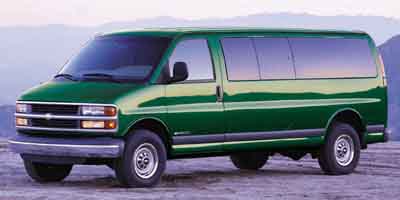
2001 Chevy Express 3500, the ultimate bicycle hauling machine,
Not the ultimate driving machine.

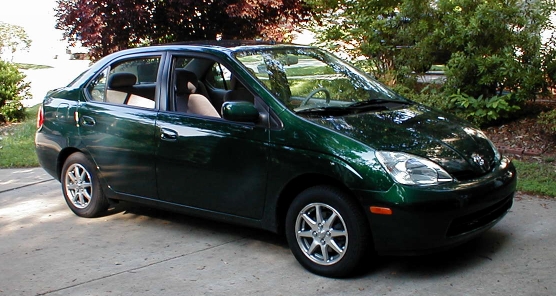
In a coincidence of time, age and interest, I got hooked on bicycle riding in 1989 as the Berlin Wall came down. By 1991 and the end of the Soviet Union, I sold the last of the dozen motorcycles I owned. From that point on, the cars I drove were bicycle and kid haulers. I bought a Chevy Monte Carlo in 1996 specifically because it seated six and the back seat folded down. My kids and I could ride in the front, with the bike in the back. In 2001, I bought a 16-passenger van, because I could put five bikes and spare wheels inside the van along with six people and a dog. Since the end of the Cold War, I have ridden more and driven less.  Right now we own one 16-year-old Prius and nine bicycles.

2001 Toyota Prius--currently our only car 

My visit to Eastern Europe on what was supposed to be a bike and train trip re-awakened my love of cars.

1964 Opel Kadett Wagon, My Third Car

In the nearly 50 years since I got my license I have driven cars as small as a 1964 Opel and as large as an M60A1 Patton tank. One of my favorite cars was a 1968 Renault 16TS I owned during the last year I was stationed in Wiesbaden, West Germany, in 1979. This little car had a 4-speed shifter on the steering column. It was nimble, quick and a lot of fun to drive on the narrow roads of Germany.

M60A1 Patton Tank, not the best on narrow roads

During my recent trip to Eastern Europe, I rented a car three different times for a day or two to get places I could not get on a train or a bike in the time I had. The first car I rented was a Toyota Auris. I rented it in Belgrade for 48 hours. In that 48 hours, I drove to Croatia and Bosnia. In both countries, I stopped near the border and rode my bike to see some of the local country. Then next day I drove to Macedonia, arrived two hours before dark and rode to the Kosovo border. The next day I drove to Thessaloniki, Greece, then Sofia, Bulgaria and back to Belgrade and returned the car.
Toyota Auris--125 mph on the highway from Belgrade south to Macedonia

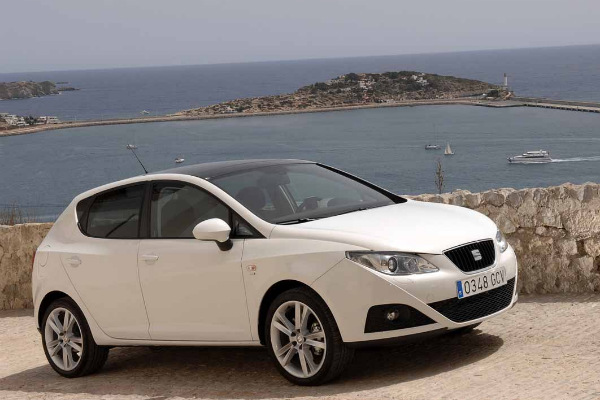
Three weeks later I was in France. I had two days before I flew to Israel, so I rented another Car, as Spanish Ibiza, and drove to Normandy as far as St. Mere Eglise from Paris.

Ibiza: from Paris to Normandy and back

When I got back from Israel, I had a couple of days before flying home. I had thought about seeing the Tour de France which was in southwest France during those days, but I am much more a fan of Formula 1 car racing than I am of bicycle racing. So I made a 48-hour 2000-kilometer loop from Paris to Cannes, then I went to Monaco, the oldest and most famous race in the World Championship, then through Torino, Italy and under the longest tunnel in the world in Mont Blanc. Then to Geneva for the night and back to Paris in time for the flight. The car for this trip was a six-speed stick shift diesel Citroen.
Citroen C3 Diesel, six-speed manual through the Alps
from Monaco to Torino to Geneva through Mont Blanc

Three cars from three countries and more than two thousand miles in a total of five days. I love driving in Europe on narrow streets and hundreds of miles of mountain roads.  Even after 150,000 miles of bicycling in the last 20 years, I am still a motorhead.
Trek Madone 9.2, my main ride in America


Monday, July 24, 2017

Visiting the Jewish Museum in Belgrade


I visited the Jewish Museum in Belgrade, just before leaving the Serbian capitol for Croatia.  The museum is on a narrow, steep street.  Just a door and a sign face the street.  Inside you climb up three flights of stairs to an upper floor.  The museum winds through hundreds of years of Jewish history in the Balkans. According to the staff, this is the only Jewish museum anywhere in the Balkan states. 


Most of the collection is artifacts and photos from the mid 19th Century to World War II.  There was a vibrant Jewish community then, several synagogues with very different architecture. During the 1930s as anti-Semitism became fashionable, the Jewish community diminished.  When the Nazis conquered the Balkans during World War II, the Jewish community was wiped out. After the war, a few Jews came back, but in 1950s the last synagogue was demolished.


At this point, the collection stops.  If I understood the guide correctly, the few remaining Jews left permanently or at least for a while in the 1990s when Slobodan Milosevic was murdering Muslims and Croats.  Jews were not a particular target, but the Holocaust was less than 50 years before, so leaving seems a lot smarter than waiting for the guys with guns to start killing Jews.


After leaving the museum, I walked back to the hotel to get my bike and get ready to leave Belgrade.  As I walked along the bustling sidewalks beside constant traffic, I was looking at the people on the street who were middle aged and older.  The slaughter in the Balkans was just two decades ago. Was I walking past a supporter of ethnic cleansing? A killer?  I had the same creepy feeling during my first visit to the city of Wiesbaden after arriving in West Germany with Brigade 76.  World War II ended just 30 years before. Were the people I passed Nazis? Were they Hitler supporters? Were they killers of Jews? 


The history of Germany and Serbia make chillingly clear the vast difference between Patriotism and Nationalism:

Nationalism says our country is the Best and inflames the worst instincts of its citizens. Draft dodgers and other cowards with loud voices can be Nationalists. Grievance and anger are the only prerequisites. Not courage.

Patriotism means service. Patriots make sacrifices. They risk, and sometimes they lose their lives to protect their country and make it greater.  Patriots fought to save the world from Nazi tyranny, then they brought democracy to Germany, Japan, Italy and other countries under tyranny.  Patriotism tears down walls. Tyrants build them.

-->

C.S. Lewis says, "Without courage there can be no virtue."

Patriotism begins with courage. Nationalism begins with fear.

God, Human, Animal, Machine by Megan O’Gieblyn, A Review

Megan O’Gieblyn ’s God, Human, Animal, Machine is not a book about technology so much as a book about belief—specifically, what happens to ...