During the height of the Cold War in the 70s and 80s, West
Germany had a higher population of American citizens than ten states. One million Americans including 250,000
soldiers and airmen and their families, lived in West Germany. The 1970 census says more Americans were
living in West Germany than in Maine, New Hampshire, Vermont, Alaska, Hawaii,
both Dakotas, Montana, Idaho and Wyoming.
Most of those Americans lived in “Little America” military
communities, shopped on Base/Post and never learned German. Sometimes, they were rudely introduced to
differences in German culture.
In 1977, I drove from Wiesbaden to Frankfurt Airport to
pickup the wife and child of one of my soldiers. The post-draft Army recruited very different
soldiers from when I enlisted in 1972.
During the draft, although mostly Southern, I met people from the entire
country. By 1977, that was over. Every
new soldier on my tank crew or in my platoon was from the South or the
West.
When I went through basic training in 1972, no one in my
platoon was married. By 1978, when we
got a replacement, I would expect he was 19 years old, married, had one child
and his 17-year-old wife was pregnant with their second child. The pregnant wife was the reason he
enlisted. That and the mill or factory or
garage or warehouse where he worked closed or laid workers off.
The woman I met at the airport on that hot July day was
older than average, but so was my soldier.
He was 21. She was 20. She was pregnant and had a two-year-old son who
was quiet like his Dad. Mom was not
happy. And she was not quiet. The flight was long. The day was hot. I had a 1969 VW Beetle. It was not air-conditioned. While we walked through the terminal, I
listened to how difficult the trip was for her.
She told me how unfair it was that there was no base housing for her PFC
husband. She asked if I could get them
on-base housing.
I could not help with that problem.
We left the airport on the A3 Autobahn. While my aging Beetle was moving, the car was
not terribly hot. The breeze from every
car on the road passing us at about twice our speed helped with cooling. We
turned onto A66 toward Wiesbaden. Two
miles later, everyone stopped. We had no
idea what was going on, but we were in a VW Beetle at Noon in July sitting
still on the Autobahn. I shut the
air-cooled engine off until we actually moved.
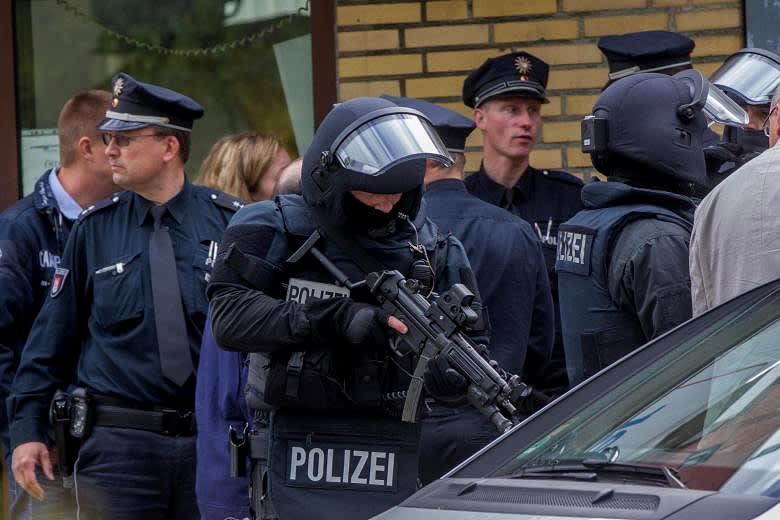
An hour later we arrived at a Polezei check point. The Baader Meinhof gang was active at that
time and the German Police were searching cars.
The melting Mom beside me was angry at the US Government, the Army,
Germany, NATO and most of the world for her current sweat-soaked state.
One of the policemen approached my window and asked for
identification and about the purpose of our trip. My passenger said “What the Hell do they need
ID for. We’re Americans. . .” Then she stopped in mid sentence. I looked to my right and another Polezei officer
had come to her window, leveled his automatic weapon at my passenger, and said,
“Identification!”
She complied. More
importantly, she shut up.
After we were out of sight on the roadblock and on our way
to Wiesbaden, I reminded my passenger we were in another country and subject to
their laws. And that she should do
whatever Polezei said. She nodded. We were quiet for the rest of the trip.
Apparently, looking down the barrel of an MP5K submachine
gun that the Polezei officer was carrying can bring a whole bunch of cultural
awareness to an American on her first trip overseas.