At the end of the
Cold War,
Russia fell into poverty and almost fell apart. Whether you date the end of the Cold War as the Fall of the Berlin Wall in 1989 or the crumbling of the
Soviet Union in 1991, post-Soviet Russia was in a dismal state in the 1990s. The collapse of government at nearly all levels made Russia a third-world economy with an enormous nuclear arsenal, as well as thousands and thousands of tons of nerve gas in rotting containers in rotting storage facilities.
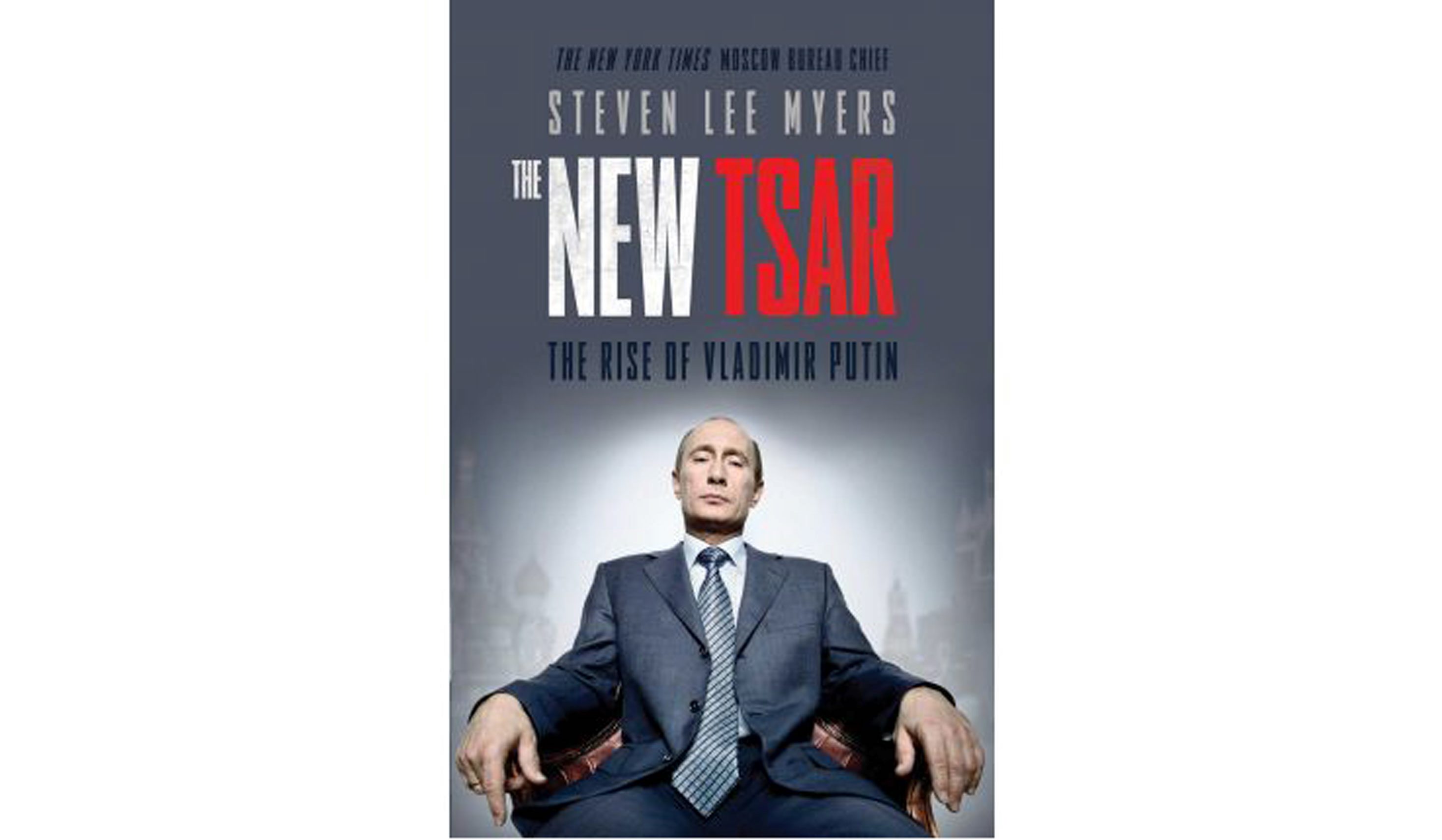
I just finished reading Steven Lee Myers book "
New Czar: Rise and Reign of Vladimir Putin." This excellent book brings together many of the details of the life of the most powerful autocrat on the planet today--and is especially good on how a mid-level
KGB agent went from the shadows to the heights of power and to enduring popularity with the Russian people.
Before I say any more about the book itself, reading the book gave me a huge feeling of a lost opportunity. The circumstances of Putin's rise made me think, "It did not have to turn out this way."
In 1945, Germany was ruin and squalor with every level of government operating on totalitarian principles. Yet America rode to the rescue with the
Marshall Plan and set Germany, at least West Germany, on the road to democracy. After we spent billions and billions trying to defeat the Soviet totalitarian state, why did we leave it to be run by a drunk selling off the assets of the state to his cronies?
The grinding poverty of the vast majority of Russians coupled with Yeltsin's cronies becoming billionaires put Putin in the presidency and kept him there. Putin was unknown in 1999 when Yeltsin put him in power. Ironically one of the reasons for Putin's rise to power was his honesty. He worked very hard in government and did not take bribes like so many others in government. Yeltsin put him in the presidency because no one had bought him off.
Myers makes very clear that Putin has been in charge since 2000 and could well continue in power till 2024, or even beyond. Putin is, as Myers makes clear, on the way to being a new Tsar. And he is popular. Even with sanctions and the current crash of oil prices, the average Russian is far better off under Putin than in the 1990s.
Which brings me to another irony I felt reading this book. The US did not rush in to prop up and bring order to Russia in collapse as we did with post-war Germany and Japan. Yet in 2003, we went into Iraq saying we could do "nation building" in a state seething with sectarian hatred.
We may have won the Cold War, but the current state of Russia and other former Soviet states says that we lost the peace. In the depths of its 1990s collapse, Russia was fending off Islamic extremism inside Russia and along its borders. In the same way Germany became an anchor in the NATO defense of Europe, we could have worked with Russia as a front-line state in the fight against Islamic terror.
Putin was born just seven months before I was. I grew up in a suburban house near Boston: safe, warm, happy and well-fed. Putin grew up in the wreckage of Leningrad, arguably the most ravaged city in World War 2, under Nazi siege for almost three years. Putin grew up hearing stories of the Great Patriotic War and the sacrifices his family, city and nation made to defeat the Nazis. Putin is a patriot. Restoring Russia's place as a world leader is and has always been part of his program as president.
A strong Russia could have been, should have been, our ally in the War on Terror. Myers book is a great read, but it ends on a somber note of repression, deception and the tragedy of an airliner shot down either by Russian soldiers or separatists armed by Russians with advanced missiles. If Myers writes a sequel in another decade, I hope it is about a Democratic Russia and not a 21st Century Tsarist Russia. But the trend lines all point to a New Tsar.