Sunday, November 2, 2014

Remembering the Tanker's Final Exam


The Moment After the 105mm Round Goes Downrange

Last post ended when my crew and I lined up for the moving range at my first annual tank gunnery.  It was April 1976.  I had enlisted in the Army the year before after spending 2-1/2 years in the Air Force.  I was a Specialist at enlistment in June of 1975, got promoted to Sergeant in January and was a tank commander.  For the driver, PFC Richard Burhans, and I it was our first gunnery.  For the loader, PFC Gene Pierce, this would be his second annual gunnery.  My loader, SPC "Merc" Morris, had been a loader in the two previous years.  This would be his first time as a gunner.  

And gunner was the position The Lord made him for.

Merc was a rumpled, complaining, lousy soldier in many ways, but was good with numbers and could think quickly and clearly about ranges, ammo and adjusting fire.   

As we rolled onto the range we loaded ammo and waited in springtime sun in Colorado.  Blue sky, little wind, and lots of nerves.  The moving range takes the crew down a lane with nine targets.  Four main gun targets, three coaxial machine gun targets, and two .50 caliber machine gun targets.  The "Coax" machine gun is a 7.62mm, belt-fed weapon mounted parallel or coaxially with the main gun.  The .50-cal is fired by the commander in the cupola on top of the tank.

After the command "Driver, Move Out" we move slowly down the range.  We are all scanning left, right and front for targets.  The first targets pop up to the right: troop targets at 400 meters.

Before I talk about firing, a word about crew commands.  The fire command is primarily for the gunner, but tells the whole crew to do something.  The format is: Alert, Ammo, Target.  So for the first engagement, when I saw the troop targets, I used the commanders override turret control to swing the turret close to the target area.  As I swung the turret, the driver brought the tank to a smooth stop and I said, "Gunner. Coax. Troops."

Merc then brought the sights to the center of the troop concentration and announced "On the way" as he squeezed the trigger.  The loader made sure the ammo belt was feeding smoothly into the coaxial machine gun while the gunner fired.

Before the new tanks with stabilized sights and guns, tanks fired from the halt.  So every time I issued a fire command, the driver's job was to bring the tank smoothly to a halt as level as possible.

Merc put a dozen tracers in the area--a total of 60 rounds.  I called ""Cease Fire!"  And then "Driver, Move Out."

The whole crew scanned for targets.  To the left, a tank-sized panel popped up.  First main gun engagement.

More next post. . .


Wednesday, October 29, 2014

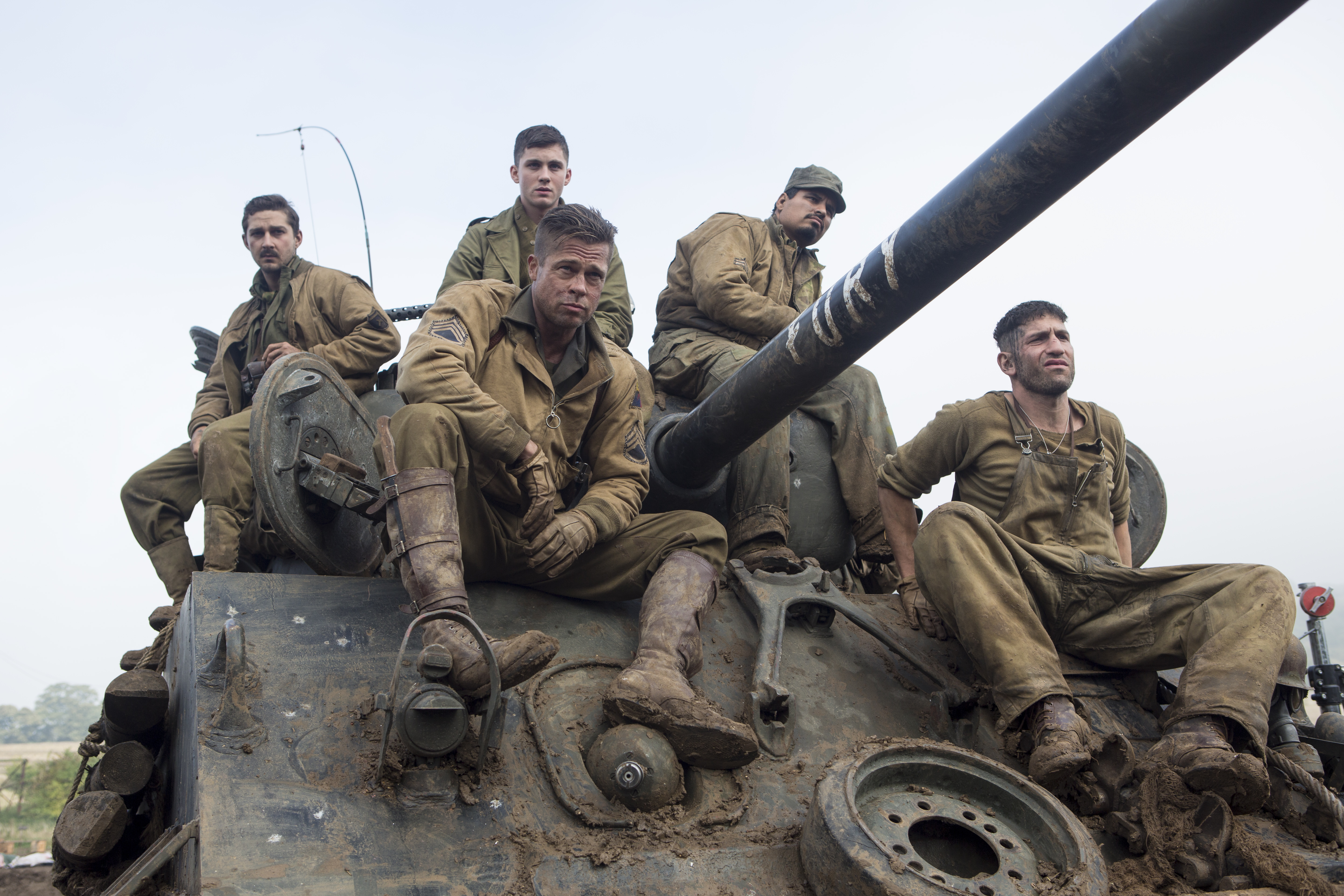
"Fury" Brings Back Memories of Tank Gunnery and Life in a Turret.


On Monday night my son Nigel and three men from Church went to see "Fury" with me.  I re-read books I love and will watch movies and TV shows I like a second, third, or more times.  Re-reading and re-watching takes away the delight of surprise that only the first time can offer, but removing surprise lets the best moments sink in more deeply.

In 1976 I spent more time inside my tank "Bad Bitch" than at any other time in my Army career.  That year our brigade was training to go to Germany for three years as Brigade '76--4,000 combat soldiers with an alert area in Fulda, West Germany:  the place where everyone thought the ground war with the Soviet Army in Europe would start.  Tom Clancy wrote his best novel about that war:  "Red Storm Rising."

In the Spring of 1976, the 54 tanks of 1st Battalion, 70th Armor, spent three weeks in the Colorado desert for annual gunnery training.  For three months before that I read the 700-page maintenance and operation manual for the M60A1 Patton tank I commanded from cover to cover.  I came to the Army from the Air Force and was determined to be as good as the Army at tank gunnery.

For three months before gunnery, my crew was the last to go home at night, and sometimes was in on weekends when everyone else was off so we could drill on every aspect of tank gunnery.  Some afternoons we drove to the top of a hill near the motor pool and tracked cars on Interstate 25.  Moving targets are difficult with a tank cannon.  We drilled on tracking targets for hours.

One of the things "Fury" gets so right is how different the members of a crew can be and how well they can work together confined in a turret despite all those differences.  My gunner was Specialist Morris.  His nickname was "Merc."  Because Mercury Morris was a start running back of the 70s.  I was a starched, creased ambitious young sergeant.  Merc was a very good gunner, but a wrinkled, complaining soldier who was at his best after smoking dope.  Outside the tank we would not spend two minutes together.  Inside Merc and I became a team that could hit targets, even if we could never hit it off.

We had an amazing loader in Eugene "Geno" Pierce.  Geno was big, strong and quick.  He could flip and armor-piercing round into the breach one-handed in two seconds and have the second round in the chamber while the first one was still rattling to the bottom of the turret after the first shot.  Our driver, Rich Burhans, was a lanky, laid-back Minnesotan.  He was perfect as a driver.  He could wait calmly during long delays and then driver the 54-ton tank smoothly down the firing lanes.

On the final day of tank gunnery when we were next up to fire on the moving range, Merc walked off into the woods to "have a smoke."  He came back calm and happy.  We were ready to fire.  Would three months of practice really pay off on the ten-minute "Final Exam" for tankers?

Next post.

Other posts on Fury:

Fourth time watching Fury

Review

Faith in Fury

Memories

God, Human, Animal, Machine by Megan O’Gieblyn, A Review

Megan O’Gieblyn ’s God, Human, Animal, Machine is not a book about technology so much as a book about belief—specifically, what happens to ...