Tuesday, May 6, 2014

Faith in the Military: Civilian Life is a Feast of Learning and a Spiritual Famine


Recently I read an article about the explosive growth in Christian colleges recently.  For many Christian kids, the choice they have is Christian college or no college.  Inside the Christian community, the secular college and university is supposed to be a place where the kids will lose their faith, led astray by unbelieving professors.  

But my first year after the military was just the opposite.  My college courses at Penn State were opening new vistas of faith and beauty beyond anything I could have imagined.  In the same course that introduced me to Dante and Machiavelli, I read Utopia by Sir Thomas More in the Norton Critical Edition. We were assigned several critical essays in addition to the text.  One was by C.S. Lewis.  It was the first time I read Lewis in his "Day Job" as a Cambridge professor of Medieval and Renaissance literature.  Lewis' essay made sense of Utopia.  Many other commenters simply wanted to claim More for their position.  

The following summer, I had a Russian literature course taught by a chain-smoking Serbian, who had escaped communism.  He taught us Tolstoy, Dostoevsky, Pushkin, Lermontov and Gogol.  I have read an re-read Russian works ever since, particularly Tolstoy's The Death of Ivan Ilych which I have read five times and just bought in a new translation.  More on the Russians later.  


At the same time Dostoevsky showed me how central suffering is to the living the Gospel, I was trying to navigate a Christian culture that went out of its collective mind during my time in Germany.  In my first year back, I fell for an Amway pitch from a very nice couple at Church.  I went to one of the big meetings with a thousand people cheering success.  The main guy on stage had made millions.  He was wearing what I would later learn was a $3,000 suit.  He was driving a 7 Series BMW.  He lived in mansion that, as he was describing it, I could only imagine had "one long staircase just going up, and one even longer coming down, and one more leading nowhere just for show. . ."

My Christian brother was telling me that what I should do was forget college, go into business, make a fortune and then I could bless many people.  Wow!!!

He really believed that.  And he thought it was the best thing for me.

But then I thought of Cliff entering the monastery in Darmstadt, Abel fasting for two weeks to find his ministry, and the life of The Lord Himself which did end in health and wealth.

The Liberals were showing me eternity.  The Conservatives were showing me self interest and greed.  Life was weird.

Friday, April 25, 2014

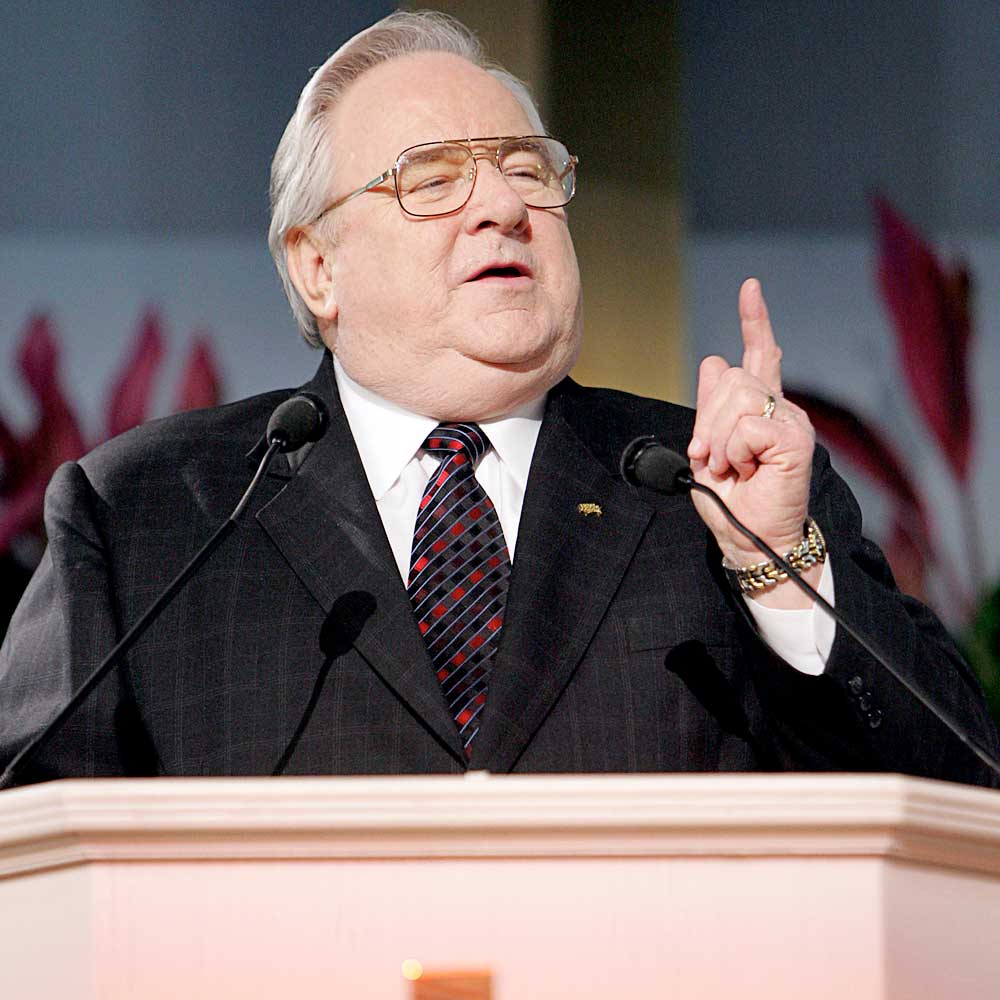
Jerry Falwell Made Me a Democrat: Faith in the Military, Part 12

Among the many contradictions in my life, I am a Democrat.  That might not seem surprising for someone who grew up in Stoneham, Massachusetts, just seven miles from Harvard and eleven miles from Boston.  But both of my parents were Barry Goldwater Republicans.  My father served in World War 2.  My favorite uncle flew three combat tours and had three additional short tours in Viet Nam.  And I enlisted in 1972, less than a year after I graduated from High School.

Then, I became a believer.  Since I started my faith journey in a Baptist Church, I accepted what my Church taught until I had a reason to believe otherwise.  If there is one thing that is clear in a Baptist Church, it is that we are all sinners who need to repent.  Every week, every Baptist Church I ever attended has an Invitation to know Jesus.  Everyone who answers that invitation is told to repent of their sins.

In Germany, we had one channel of American TV, the Stars and Stripes newspaper, and Armed Forces Radio.  We got TV programs more than a year late.  The culture in America was remote and in the years I was gone, the American Evangelical view of politics and political action changed radically--at least it seemed so to me.

Among the gifts I received as a new believer was a subscription to the weekly Sword of Lord newspaper.  Before I left for Germany, Baptists tried to Evangelize Mormons, Jehovah's Witnesses, Catholics and almost anyone else who was not a Bible-believing American.

When I came back from Germany, I read Machiavelli and got a very good primer on how politics worked.  Reading Dante, Aquinas and Sir Thomas More made me quite sure Catholics were part of the community of believers.

When I left for Germany, Evangelical Christians stayed out of politics.  Their hope was focused on the next life not on amassing power in this life.  Jerry Falwell changed that in 1979.  He decided that Christians needed political power and founded the Moral Majority.  The name itself is a flat contradiction of Baptist doctrine.  You can't make a Moral Majority out of sinners.

No reading of the New Testament can show Jesus either taking or recommending political power.  The Church would have power from on high, not from politics.  Dante's Hell is full of Popes and high officials of the Church.  They are not there because they are Catholic, they are there because they used pursued political power.  Falwell dismissed the lessons of the Reformation and two millenia of Church history when he decided to grasp the levers of politics.

Once it was clear to me that the Evangelical Church was going to sell out for power, I decided I would vote for the other party.  And in every election since that is how I voted.  The record of the right wing Church in politics is one of betrayal on both sides, but that's what any reader of Machiavelli would expect.

Although Falwell denied Original Sin to enter politics, he never ceased to call out the sins of others.  He blamed the attacks on America on 9-11 on gays.  Until his death, Falwell reminded me of why Christians risk their own soul when they grasp for political power and they certainly bring the Church into disrepute.  If someone tries to write a new Inferno in this century, Falwell, Pat Robertson, D. James Kennedy, James Dobson and many others will be roasting in the flames of that 21st century Gehenna.

"When we Christians behave badly, or fail to behave well, we are making Christianity unbelievable to the outside world."
-CS Lewis

God, Human, Animal, Machine by Megan O’Gieblyn, A Review

Megan O’Gieblyn ’s God, Human, Animal, Machine is not a book about technology so much as a book about belief—specifically, what happens to ...